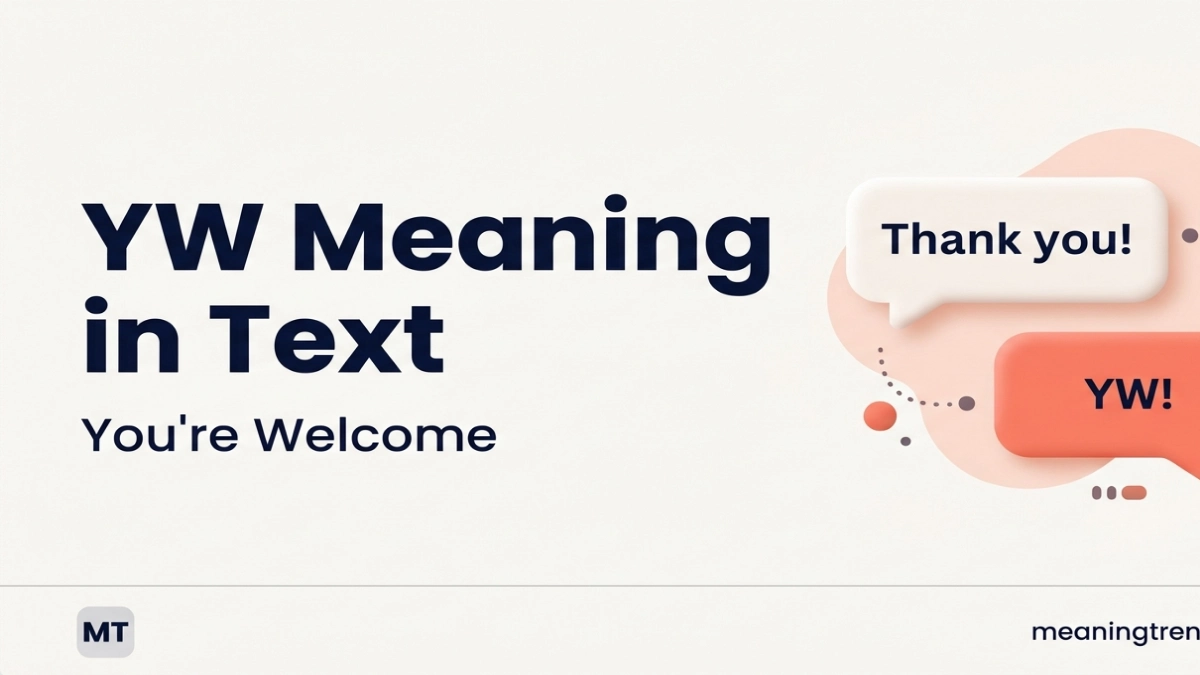
Quick Answer: In texting, YW means “you’re welcome.” It’s a short, informal response to someone saying “thank you” or “thanks.” People use it to acknowledge appreciation without typing the full phrase. For example, if someone texts “Thanks for your help!” and you reply “YW,” you’re simply saying “You’re welcome.”
Imagine asking a friend for directions, receiving their help, and texting “TY!” A moment later, they respond with “YW.” If you’re unfamiliar with texting abbreviations, those two letters might seem confusing.
Short replies like this are useful in casual conversations because they keep messages brief. However, their tone isn’t always obvious. A quick “yw” might feel friendly and natural in one conversation but slightly abrupt in another, depending on the surrounding messages and the relationship between the people texting.
Understanding what YW means in text messages is straightforward. The more useful skill is recognizing when it fits, how it may come across, and If you need to respond at all.
What Does YW Mean in Text?
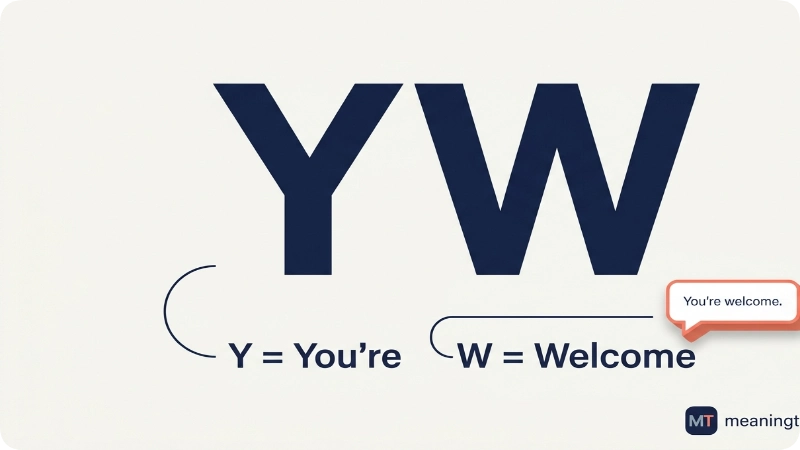
YW stands for “you’re welcome” in everyday text conversations. It’s an initialism formed from the first letters of the two words:
- Y = You’re
- W = Welcome
People typically send YW after receiving a message of thanks. It performs the same conversational function as saying “you’re welcome” aloud.
For example:
A: “Thanks for sending me the notes!”
Person B: “YW!”
B is acknowledging the thanks in a brief, casual way.
YW is not usually a question, request, or expression of frustration. It’s a polite acknowledgment, although the exact tone can depend on how it’s written and what came before it.
The abbreviation can appear as YW, yw, or Yw. These variations generally carry the same meaning. Capitalization alone doesn’t establish If someone is being warm, sarcastic, or serious.
Why Do People Use YW in Text Messages?
The main reason people use YW is convenience. It’s quicker to type than “you’re welcome,” especially when the conversation is casual and the meaning is already clear.
YW can serve several everyday purposes.
To acknowledge someone’s thanks
The most direct use is responding to appreciation.
Person A: “Thank you for reminding me about the meeting.”
Person B: “yw!”
This is a simple acknowledgment that doesn’t require a longer conversation.
To keep a conversation casual
Friends may prefer short replies when texting back and forth quickly.
Person A: “Thx for the playlist!”
Person B: “yw 😊”
The emoji adds a friendly touch, although it doesn’t change the basic definition.
To finish a conversation naturally
Sometimes YW signals that the exchange is complete.
Person A: “Thanks again!”
Person B: “YW”
Neither person necessarily needs to send another message.
That doesn’t mean YW always indicates someone wants to end the conversation. It may simply be the response they chose at that moment.
How Does Context Change the Tone of YW?
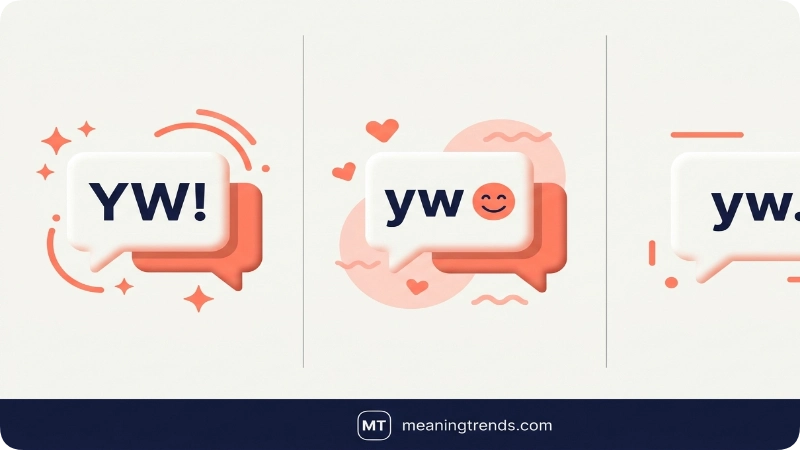
Although the meaning of YW is usually clear, its emotional tone can be less certain.
The same two letters may sound different depending on the conversation, the sender’s usual texting style, and any additional words or emojis.
YW from a friend
Among friends, YW often feels relaxed and ordinary.
Friend: “Thanks for helping me study!”
You: “yw!!”
The exclamation marks may make the response feel more enthusiastic.
YW from someone you’re dating
If someone you’re dating responds with “yw,” it generally still means “you’re welcome.”
For example:
You: “Thank you for dinner tonight ❤️”
Them: “yw ❤️”
The heart may suggest affection in that exchange. However, YW itself isn’t a romantic abbreviation, and one message isn’t enough to determine someone’s feelings.
YW in a group chat
In a group conversation, YW can acknowledge a particular person’s thanks without interrupting the larger discussion.
Alex: “Thanks for sharing the document.”
Jordan: “yw”
This is a normal, practical reply.
YW in a tense conversation
A short response may sometimes seem dismissive when the surrounding conversation is already uncomfortable.
Person A: “Well, thanks for finally sending it.”
Person B: “yw.”
The reply could be neutral, restrained, or sarcastic. The earlier wording matters more than the abbreviation alone.
The important rule: YW tells you what someone is saying, but it doesn’t reliably tell you how they feel.
Examples of YW in Text Conversations
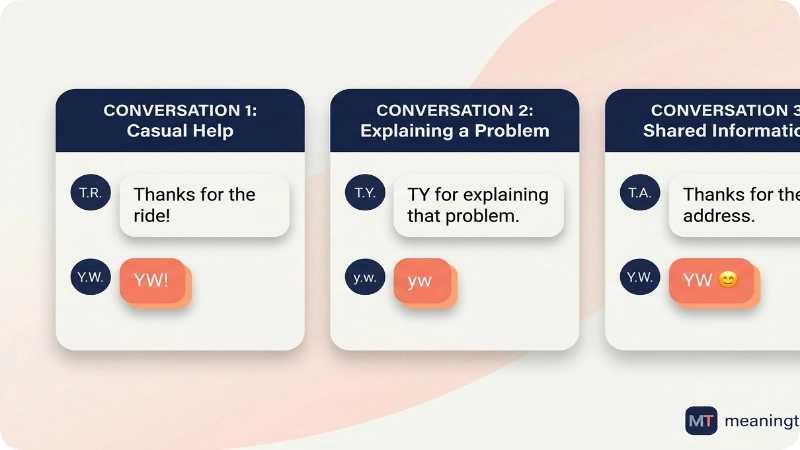
These illustrative conversations show how YW works in everyday situations.
| Situation | Example conversation | What YW communicates |
| Helping a friend | A: “Thanks for the ride!” B: “YW!” | Acknowledging appreciation |
| Schoolwork | A: “TY for explaining that problem.” B: “yw” | A casual you’re welcome |
| Sharing information | A: “Thanks for the address.” B: “YW 😊” | A friendly acknowledgment |
| Workplace chat | A: “Thanks for the update.” B: “YW” | A brief, informal reply |
| Making plans | A: “Thanks for booking the table!” B: “yw!” | Responding to gratitude |
| Online gaming | A: “Thanks for the help!” B: “yw” | A quick acknowledgment |
The wording is flexible. Someone might use YW with punctuation, an emoji, or no additional characters.
These small differences may influence how a message feels, but they don’t create separate definitions.
Is YW Rude, Friendly, or Sarcastic?
YW isn’t inherently rude. It’s simply an abbreviated form of a polite expression.
However, a short text can sometimes feel less personal than a complete sentence.
Consider these responses:
- “YW!” — May sound upbeat or enthusiastic.
- “yw 😊” — May sound warm and friendly.
- “yw” — Usually casual and neutral.
- “YW.” — May feel more matter of fact in some conversations.
- “Yeah, yw.” — Could sound impatient or sarcastic depending on context.
None of these interpretations is guaranteed.
Some people naturally text in short sentences without emojis or punctuation. Others prefer longer, more expressive messages. Their habits can affect how you should interpret a reply.
If someone sends “yw” after you’ve thanked them, there’s usually no reason to assume they’re upset.
Can YW be sarcastic?
Yes, someone can use “you’re welcome” sarcastically, and the abbreviation can carry that tone too.
For example:
Person A: “I didn’t even ask you to do that.”
Person B: “yw.”
In this exchange, YW might suggest irritation because of the preceding message.
Sarcasm comes from the broader conversation rather than the letters Y and W themselves.
How Do You Reply to YW in Text?
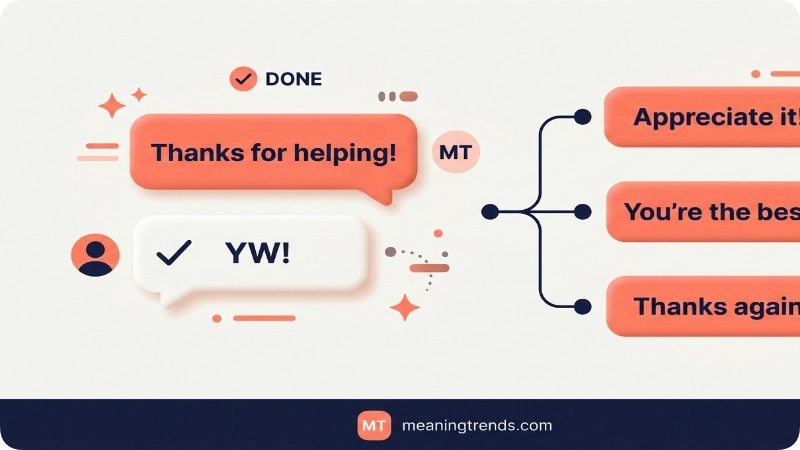
You usually don’t need to reply to YW because it already acknowledges your thanks.
For example:
You: “Thanks for helping!”
Friend: “YW!”
The exchange can naturally end there.
If you want to continue the conversation, you have several options.
Friendly replies
- “Appreciate it!”
- “You’re the best!”
- “Thanks again!”
- “😊”
These work when you want to reinforce your appreciation.
Playful replies
With someone you know well, you could respond:
- “You’re a lifesaver 😂”
- “I owe you one!”
- “Legend!”
These add personality rather than changing the meaning of YW.
When you’re unsure about the tone
If the conversation seems tense, you don’t have to guess what the sender intended.
You could ask:
“Hey, are we good?”
That question makes sense when there’s already a reason to suspect a problem. It would usually be unnecessary after an ordinary “yw” response.
When Should You Use or Avoid YW?
YW works best in informal conversations where short abbreviations are familiar and appropriate.
When YW is a good choice
You can comfortably use it in:
- Casual messages with friends
- Family group chats
- Online gaming conversations
- Informal social media messages
- Relaxed chats with classmates or coworkers
For example:
Coworker: “Thanks for sending that over!”
You: “YW!”
In an informal workplace chat, this may feel perfectly natural.
When to use “you’re welcome” instead
Full wording is generally a better choice in professional or formal communication, particularly when you want to sound attentive and polished.
For example, in a customer service email:
“You’re very welcome. Please let me know if you need anything else.”
That feels more complete than replying only with “YW.”
The best choice depends on the relationship, communication channel, and expectations of the person receiving your message.
What Are Other Ways to Say YW?
You don’t always have to use “you’re welcome” when someone thanks you.
Several alternatives express a similar idea while creating slightly different impressions.
| Expression | Meaning | Typical tone |
| You’re welcome | Acknowledges thanks | Polite and neutral |
| No problem | The help wasn’t a burden | Casual and reassuring |
| No worries | There’s nothing to worry about | Relaxed and friendly |
| Happy to help | Helping was a pleasure | Warm and professional |
| Anytime | Willing to help again | Friendly and supportive |
| My pleasure | Glad to have helped | Polite and warm |
| Of course | The help was natural or expected | Casual or reassuring |
These phrases aren’t always interchangeable in every situation, but they can all work as responses to gratitude.
For example, if a colleague thanks you for solving an issue, “Happy to help” may sound more engaged than “YW.”
If a friend thanks you for a small favor, “No worries!” may feel more conversational.
YW vs. TY vs. NP: What’s the Difference?
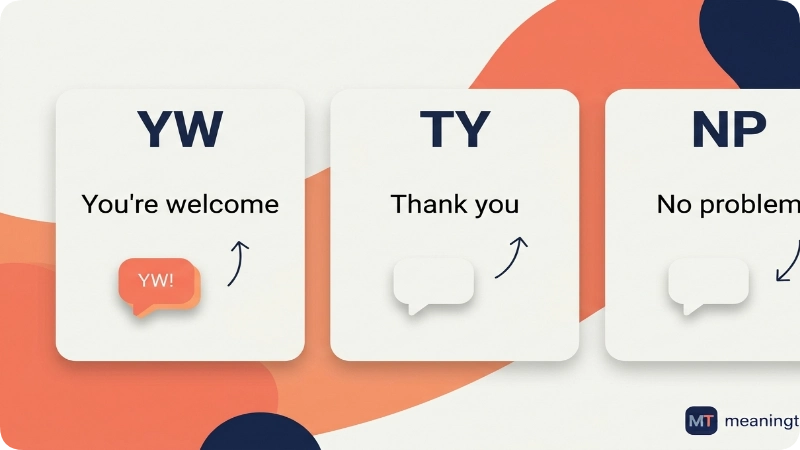
YW is often seen alongside other short texting expressions, especially TY and NP.
| Expression | Meaning | Typical use | Key distinction |
| YW | You’re welcome | Responding to thanks | Acknowledges gratitude |
| TY | Thank you | Expressing gratitude | Starts the thank you exchange |
| THX | Thanks | Expressing gratitude | Informal alternative to TY |
| NP | No problem | Responding to thanks | Suggests the favor wasn’t a burden |
| NVM | Never mind | Withdrawing or dismissing a point | Not a thank you response |
The easiest distinction is that TY expresses thanks, while YW responds to thanks.
For example:
Person A: “TY for the help!”
Person B: “YW!”
Or:
Person A: “THX!”
Person B: “NP!”
Both exchanges are natural in casual texting.
YW and NP may perform the same conversational role, but they aren’t literal synonyms. One means “you’re welcome,” while the other means “no problem.”
Does YW Mean the Same Thing on Snapchat, Instagram, and TikTok?
In ordinary messages, YW generally means “you’re welcome” regardless of If the conversation takes place on Snapchat, Instagram, TikTok, WhatsApp, or another messaging service.
The platform alone doesn’t change the abbreviation’s basic meaning.
YW on Snapchat
If someone sends “yw” after you’ve thanked them in a Snapchat chat, they’re most likely acknowledging your thanks.
A photo, emoji, or earlier exchange may add emotional context, but YW itself doesn’t have to carry a special Snapchat specific meaning.
YW on Instagram
YW can appear in Instagram direct messages or comments.
For example:
Comment: “Thanks for the tutorial!”
Reply: “yw!”
The reply means “you’re welcome.”
YW on TikTok
Someone might use YW when responding to a thank you comment.
Comment: “Thanks for explaining this!”
Reply: “YW!”
Again, the meaning is straightforward.
In all three settings, the surrounding conversation provides more useful clues about tone than the platform name.
FAQs About YW Meaning in Text
What does YW stand for in texting?
YW stands for “you’re welcome.” It’s an informal abbreviation commonly used as a response to “thank you” or “thanks.”
What does YW mean from a girl?
It generally means “you’re welcome,” just as it would from anyone else. The sender’s gender doesn’t determine If the message is friendly, romantic, sarcastic, or neutral.
What does YW mean from a guy?
YW typically means “you’re welcome.” To understand the tone, look at the surrounding messages and the person’s usual communication style rather than their gender.
Does YW mean yes?
Not in its ordinary texting use. YW means “you’re welcome,” not “yes.” If it appears in a conversation where that meaning doesn’t fit, ask the sender what they meant instead of assuming another expansion.
Is YW flirty?
YW isn’t inherently flirty. It may appear in an affectionate conversation, but the abbreviation itself doesn’t establish romantic interest.
Is it okay to say YW instead of you’re welcome?
Yes. YW is appropriate for many informal text conversations. In formal emails, professional correspondence, or customer facing communication, writing “you’re welcome” is usually clearer.
Do I need to respond when someone says YW?
No. Since YW usually completes a thank you exchange, you can leave the conversation there. If you’d like to continue talking, you can send another friendly message.
Does lowercase yw mean something different?
Usually not. Lowercase yw and uppercase YW generally have the same meaning. Capitalization may affect how a message looks, but it doesn’t reliably reveal the sender’s mood.
Conclusion
YW is a simple abbreviation for “you’re welcome,” most often used after someone says thanks. It’s a convenient way to acknowledge appreciation in casual text messages, social media conversations, and group chats. If someone types “YW!” or “yw,” the underlying meaning usually stays the same.
The most important thing is to interpret the message within its conversation. A brief reply isn’t automatically rude, and a friendly emoji doesn’t necessarily indicate romantic interest. If the context is unclear, avoid making assumptions about the sender’s intentions.
When someone thanks you, feel free to reply with “YW” in a casual setting. For more formal conversations, spell out “you’re welcome” or choose a warmer alternative such as “happy to help.” And if you receive YW yourself, remember that you usually don’t need to respond again.

Alex writes about the words and shortcuts people use in texts, group chats, and social media. Each guide explains the meaning with everyday examples and tips on when to use it