QUICK ANSWER
LWK in text usually means “low-key” or “lowkey.” It’s an informal abbreviation people use to express something subtly, somewhat, or without making a big deal about it. For example, “I lwk miss you” means “I kind of miss you” or “I quietly admit that I miss you,” depending on the conversation.
Seeing three unfamiliar letters in a message can make an otherwise simple conversation confusing. You might wonder whether someone is using an acronym, making a joke, or hinting at a feeling they don’t want to express directly.
The important thing is that LWK doesn’t automatically reveal how strongly someone feels. It changes how a statement comes across, often making an opinion or admission sound more casual or understated. Understanding the sentence around it will help you interpret the message without assuming too much about the sender’s intentions.
What Does LWK Mean?
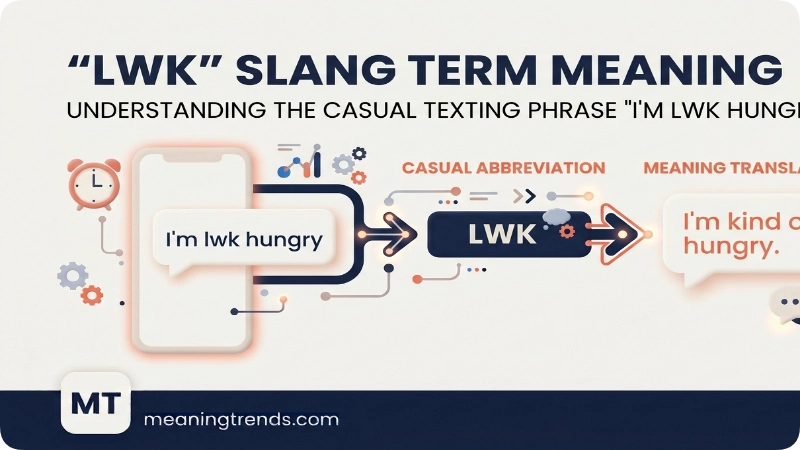
LWK is a shortened texting form of low-key, an informal English expression associated with understatement, subtlety, and limited intensity.
In everyday conversations, people use it to soften what they’re saying. It can make an opinion sound less forceful, express a mild feeling, or introduce something they’re admitting casually.
For example:
- “I’m lwk hungry.” = I’m kind of hungry.
- “I lwk love this song.” = I secretly or genuinely like this song, without making a big deal about it.
- “That movie was lwk good.” = That movie was actually pretty good, although I’m expressing the opinion casually.
The exact replacement depends on the sentence. Sometimes “a little” works best; in other situations, “quietly,” “secretly,” or “honestly” may communicate the intended nuance more naturally.
Wiktionary recognizes lwk as an internet-slang and text-messaging abbreviation of low-key. This supports treating it as a shortened spelling rather than inventing a separate phrase for each letter.
Slang usage verified: October 2026
What Does Each Letter in LWK Stand For?
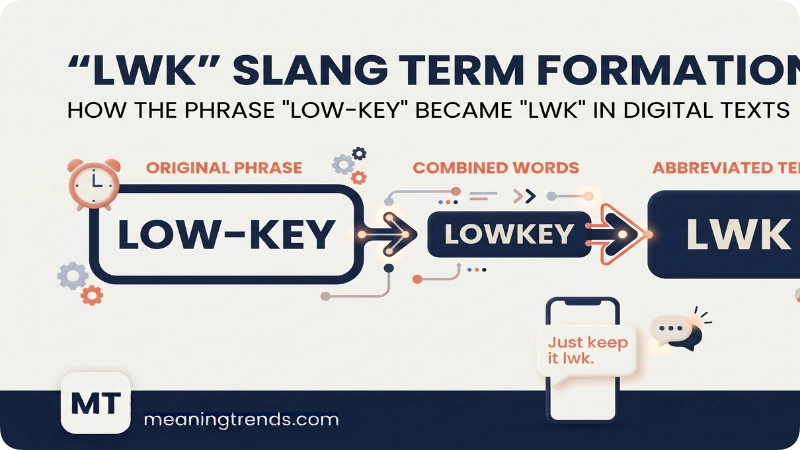
LWK is not generally used as an acronym in which each letter represents a separate word. Instead, it’s a consonant-shortened spelling of low-key.
The vowels are removed to create a shorter form that fits naturally into quick digital conversations.
| Form | Meaning |
| Low-key | Original expression |
| Lowkey | Informal one-word spelling |
| LWK | Shortened texting form |
So, if someone asks for the full form of LWK, the appropriate answer is low-key, not three separate words beginning with L, W, and K.
How Does Context Change the Meaning of LWK?
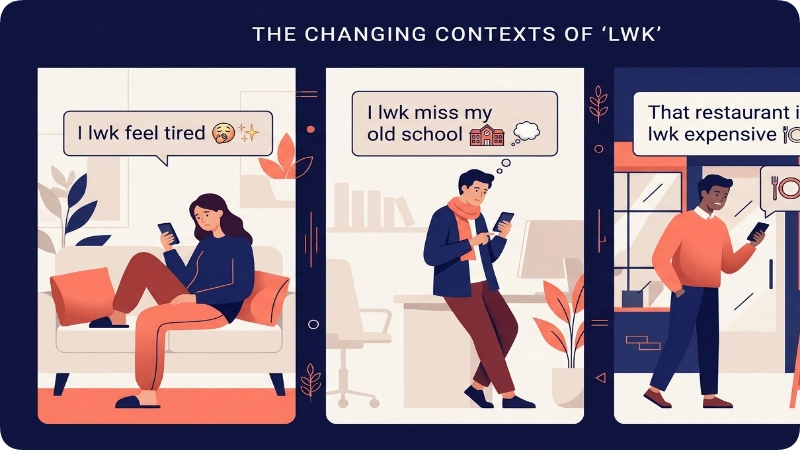
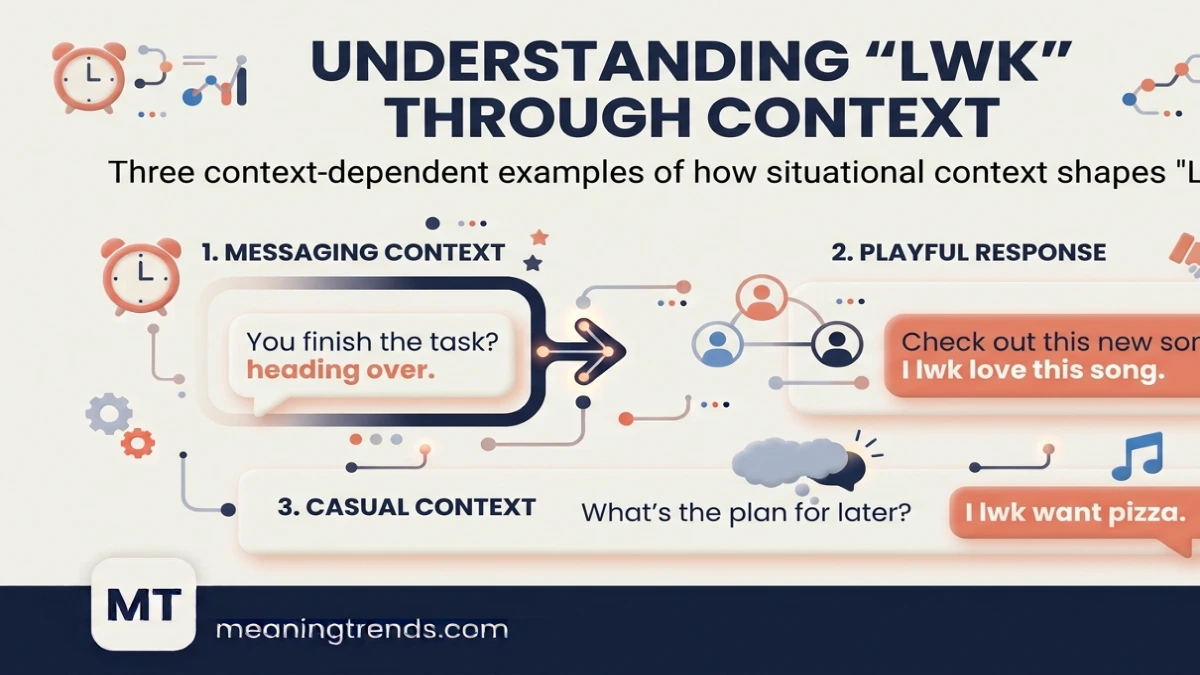
Although LWK generally represents low-key, its precise meaning depends on the sentence and the subject being discussed.
Here are three useful ways to interpret it.
1. When Someone Describes a Mild Feeling
Consider this message:
“I lwk feel tired today.”
The sender probably means they’re somewhat tired. They’re expressing a feeling without emphasizing it too strongly.
In this situation, LWK is close to:
- A little.
- Kind of.
- Somewhat.
2. When Someone Admits Something Quietly
Consider:
“I lwk miss my old school.”
This could mean the sender misses their old school but isn’t making a big emotional announcement about it.
Here, LWK may suggest a quiet admission or an understated feeling.
It doesn’t necessarily mean the person is hiding a major secret. The wording alone doesn’t establish that.
3. When Someone Shares an Opinion
For example:
“That restaurant is lwk expensive.”
The sender thinks the restaurant is somewhat expensive but presents the opinion casually.
Likewise:
“I lwk think you’re right.”
This communicates agreement in a relatively understated way.
A useful interpretation rule: Replace LWK with “low-key” first, then see whether “kind of,” “somewhat,” or “quietly” makes the sentence clearer. Don’t force one English replacement into every conversation.
Examples of LWK in Conversation
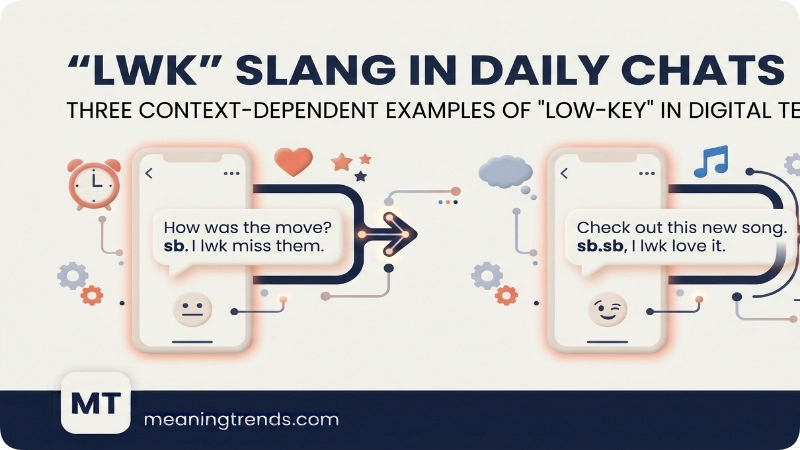
The following are illustrative conversations showing how people might use LWK in everyday texting.
Example 1: Talking About Feelings
Person A: Do you miss your old friends?
Person B: Yeah, I lwk miss them.
Meaning: Person B admits missing their friends but expresses the feeling casually.
Example 2: Expressing Interest
Person A: Have you listened to that new album?
Person B: Yeah, I lwk love it.
Meaning: Person B genuinely likes the album but uses understated wording.
Example 3: Talking About Food
Person A: Do you want to order pizza?
Person B: I lwk want pizza right now.
Meaning: Person B is expressing a casual craving. Here, LWK is close to “kind of.”
Example 4: Sharing an Opinion
Person A: What did you think of the movie?
Person B: It was lwk amazing.
Meaning: Person B liked the movie and communicates that opinion in a relaxed, understated way.
Example 5: Talking About Someone
Person A: Do you like him?
Person B: I lwk think he’s cute.
Meaning: Person B expresses some interest, possibly in a slightly hesitant or playful way. However, the message alone doesn’t prove romantic attraction.
Example 6: Admitting Nervousness
Person A: Are you nervous about your interview?
Person B: Lwk, yeah.
Meaning: Person B admits feeling somewhat nervous without making the situation sound dramatic.
Is LWK Rude, Flirty, or Offensive?
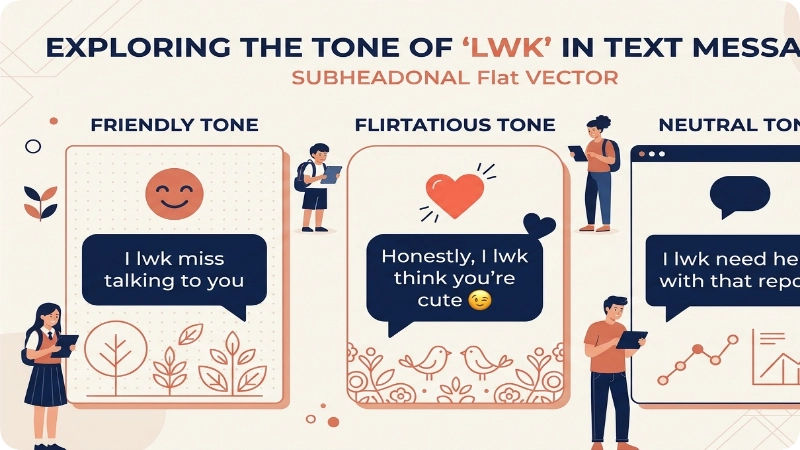
LWK is generally a neutral, informal expression. It isn’t inherently rude, romantic, insulting, or offensive.
Its tone comes mainly from the words surrounding it and the relationship between the people communicating.
Can LWK sound flirty?
Yes, it can appear in flirtatious conversations.
For example:
“I lwk miss talking to you.”
This might be a gentle way of expressing affection or interest. However, it could also be a friendly statement, depending on the relationship and previous conversation.
Can LWK sound rude?
Not by itself. Consider:
“I lwk don’t like that idea.”
The sender is expressing disagreement, but the abbreviation can make the statement sound less forceful.
The actual tone still depends on the wording and conversational circumstances.
Can LWK express sarcasm?
It can appear in sarcastic messages, but sarcasm isn’t part of its fixed definition.
For example:
“Yeah, that was lwk the worst experience ever.”
The exaggerated wording may suggest sarcasm. LWK itself doesn’t establish that interpretation.
How Do You Reply to LWK in a Text?
Your response depends on what the sender is talking about. Since LWK usually softens a statement, you can respond naturally without treating it as a special question or hidden message.
Here are some possible replies.
| If they say… | You could reply… |
| “I lwk miss you.” | “I miss you too!” |
| “I’m lwk tired.” | “You should get some rest.” |
| “I lwk like this song.” | “Same, it’s so good!” |
| “I lwk want pizza.” | “Let’s order some!” |
| “I lwk think you’re right.” | “Haha, glad you agree.” |
| “I’m lwk nervous.” | “Don’t worry, you’ve got this!” |
If you’re unsure what someone means, you can simply ask:
- “What do you mean by low-key?”
- “Do you mean a little?”
- “Are you saying you secretly like it?”
There’s no need to overthink the abbreviation. Respond to the actual message rather than assuming the sender has a hidden intention.
When Should You Use or Avoid LWK?
LWK is best suited to informal digital communication. It works when both people understand texting slang and the conversation doesn’t require precise wording.
Good situations for using LWK:
- Casual conversations with friends.
- Personal text messages.
- Social media comments.
- Group chats.
- Playful conversations with someone you know.
Situations where you should avoid it:
- Formal emails.
- Academic assignments.
- Professional documents.
- Official announcements.
- Serious conversations where clarity matters.
For example, instead of writing:
“I’m lwk concerned about the project.”
You could write:
“I’m somewhat concerned about the project.”
The second version is clearer and more appropriate for professional communication.
You can also simply write “low-key” instead of LWK if you want to keep the casual tone while making the message easier to understand.
What Are Other Ways to Say LWK?
Several standard-English expressions can communicate the general idea behind LWK. However, they’re not perfect replacements in every situation.
| Alternative | Meaning | Example |
| Kind of | To some extent | I’m kind of tired. |
| A little | To a small degree | I’m a little nervous. |
| Somewhat | To a certain degree | It’s somewhat expensive. |
| Quietly | Without drawing attention | I quietly agreed. |
| Secretly | Without others knowing | I secretly liked the idea. |
| Understatedly | Without strong emphasis | She expressed her opinion in an understated way. |
Choose the alternative that matches the actual sentence. For example, “secretly” can suggest hiding something, while “kind of” usually communicates a degree or intensity.
FAQs About LWK Meaning in Text
1. What does LWK stand for in texting?
LWK stands for low-key. It’s a shortened spelling used in casual messages to express something subtly, somewhat, or without much emphasis.
2. Is LWK the same as lowkey?
Yes. LWK is a shortened texting form of low-key or lowkey. The spelling is different, but the underlying expression is the same.
3. Does LWK mean secretly?
Sometimes. In a message such as “I lwk like him,” it may suggest a quietly admitted feeling. However, in “I’m lwk hungry,” it generally means “I’m kind of hungry.”
4. What does LWK mean from a girl or a guy?
It generally means low-key regardless of who sends it. The sender’s gender doesn’t create a different definition. The surrounding conversation determines whether the message sounds friendly, playful, affectionate, or neutral.
5. Is LWK an acronym or an abbreviation?
It’s an abbreviation or shortened spelling, not generally an initialism with a separate word for every letter. It comes from low-key.
6. Is LWK appropriate for professional messages?
It’s better to avoid LWK in formal communication because not everyone recognizes internet slang. Use expressions such as “somewhat,” “a little,” or “to a certain extent” when clarity matters.
7. What is the opposite of LWK?
The opposite idea is generally expressed by high-key, which communicates something openly, strongly, or with emphasis.
For example:
- “I’m lwk excited.” = I’m somewhat excited or expressing excitement casually.
- “I’m high-key excited.” = I’m openly or very excited.
8. Does LWK always mean something romantic?
No. LWK can describe feelings, opinions, preferences, reactions, and ordinary situations. It only sounds romantic when the surrounding conversation supports that interpretation.
Conclusion
LWK is an informal texting abbreviation for low-key. People use it to make statements sound more understated, express something to a limited degree, or admit a feeling without placing too much emphasis on it. Depending on the sentence, it can mean “kind of,” “somewhat,” or “quietly.”
The most important thing to remember is that LWK doesn’t communicate one fixed emotional intensity. Someone saying “I lwk miss you” may be expressing affection casually, while someone saying “I’m lwk tired” is simply describing how they feel. The surrounding conversation matters more than the abbreviation alone.
If someone sends you LWK and you’re unsure what they mean, read the complete sentence before interpreting their tone. You can also ask a simple question if clarification is needed. When using it yourself, keep it to relaxed conversations where informal language feels natural.

Alex writes about the words and shortcuts people use in texts, group chats, and social media. Each guide explains the meaning with everyday examples and tips on when to use it