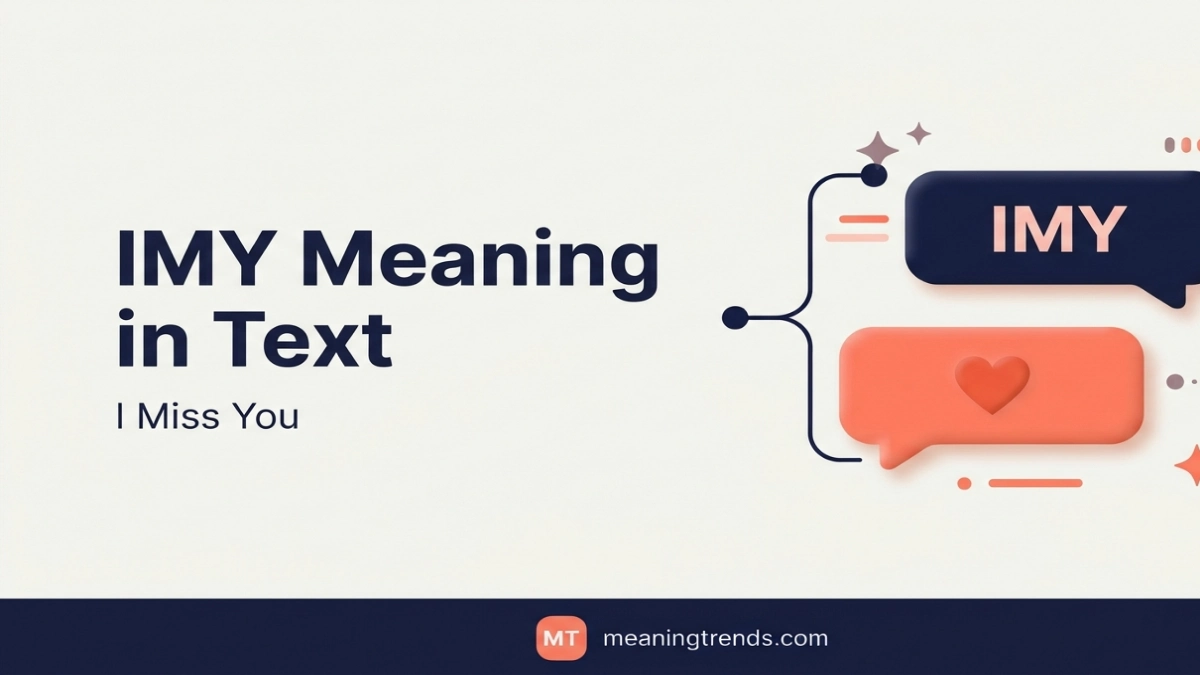
IMY means “I miss you” in text messages. It’s an informal abbreviation used to tell someone you miss them, whether they’re a friend, family member, romantic partner, or someone you haven’t talked to in a while. For example, “Hey, imy!” simply means “Hey, I miss you!”
Imagine getting a latenight message from someone that says, “imy ❤️.” You understand the words, but you might wonder whether they’re being romantic, friendly, or just nostalgic.
That’s where context becomes important.
Three simple letters can express affection, longing, or a desire to reconnect. But the abbreviation alone doesn’t reveal exactly how the sender feels about your relationship.
The meaning becomes clearer when you consider who sent it, what you’ve been discussing, and how you usually communicate.
What Does IMY Mean in Text?
IMY stands for “I miss you.” It’s a texting initialism, meaning each letter represents the first letter of a word.
People use it when they want to express that they miss someone’s presence, company, or communication without typing the entire sentence.
The expression can communicate several related feelings:
- Affection: Letting someone know they’re important to you.
- Longing: Expressing a wish to see or talk to someone again.
- Nostalgia: Remembering time spent together.
- Connection: Reaching out after a period without contact.
For example:
Text: “It’s been forever since we hung out. IMY!”
Meaning: The sender misses spending time with you and may want to reconnect.
The literal meaning stays the same, but the emotional tone depends on the conversation.
What Does Each Letter in IMY Stand For?
The abbreviation has a straightforward breakdown.
| Letter | Meaning |
| I | I |
| M | Miss |
| Y | You |
Together, the letters form the sentence “I miss you.”
IMY is an initialism rather than a shortened spelling of one word. It’s generally read as the full phrase when spoken aloud.
You’ll see it written as IMY, imy, or occasionally Imy. Capitalization doesn’t change the definition.
For instance, “IMY so much” and “imy so much” communicate the same basic message.
Why Do People Say IMY in Text Messages?
Typing “imy” is a quick, casual way to express a personal feeling.
People may use it when they’re apart from someone they care about, haven’t spoken recently, or want to restart a conversation.
It can also feel less formal than writing out “I miss you,” especially in a short exchange.
Consider these situations:
- A friend moves away and texts, “College isn’t the same without you. imy.”
- A partner traveling for work writes, “Wish you were here. IMY.”
- A sibling sends, “The house is so quiet without you, imy!”
- An old friend reaches out with, “Just saw our old photos. imy!”
Each message expresses missing someone, but the relationships and circumstances give the words different emotional weight.
Sometimes, IMY is simply a warm expression. Other times, it’s an invitation to talk, reconnect, or make plans.
However, receiving the abbreviation doesn’t automatically mean the sender expects a romantic response or wants to restart a past relationship.
How Does Context Change the Meaning of IMY?
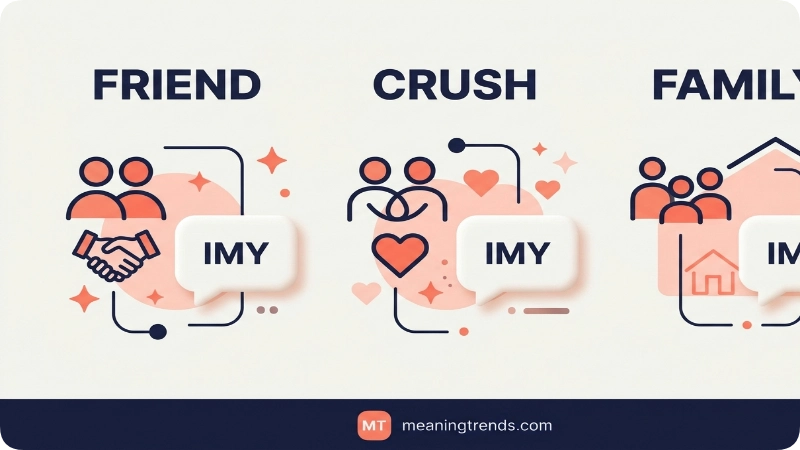
Although IMY has a clear definition, understanding the sender’s intention requires more than recognizing the abbreviation.
Look at the surrounding words, your relationship, and the conversation’s history.
IMY From a Friend
When a friend sends IMY, they’re usually expressing that they miss your friendship or the time you spend together.
Example:
“Remember our weekend road trips? IMY!”
The reference to shared memories suggests the sender is feeling nostalgic and may want to catch up.
A natural response might be, “I miss those days too! We should plan something.”
IMY From a Crush
Receiving “imy” from someone you’re interested in can feel exciting.
It may suggest that they enjoy your company and wish you were around. If you’ve already been flirting, it could carry romantic warmth.
Example:
“Had so much fun with you yesterday. imy already.”
The mention of enjoying your time together makes the message more personal.
Still, IMY alone isn’t proof of romantic attraction. Someone can miss you without wanting a romantic relationship.
IMY From a Boyfriend or Girlfriend
In an established romantic relationship, IMY often expresses affection and a desire for closeness.
Example:
“Can’t wait until Friday. IMY ❤️”
The reference to an upcoming meeting suggests the sender is looking forward to spending time together.
The heart emoji adds warmth, but the existing relationship is the stronger clue to the message’s romantic tone.
IMY From an Ex
An ex sending “imy” can be harder to interpret.
They may genuinely miss you, feel nostalgic, want to reconnect, or simply be expressing a temporary emotion.
Example:
“Heard our old favorite song today. imy.”
The shared memory explains why they might be thinking about you, but it doesn’t establish whether they want to resume the relationship.
If their intention matters to you, it’s reasonable to ask, “What made you reach out?”
You don’t have to return the sentiment or reopen a conversation just because someone says they miss you.
IMY From a Family Member
Between family members, IMY usually communicates care and a wish to spend time together.
Example:
“Dinner isn’t the same without you here. IMY!”
The message likely reflects missing familiar routines and family time.
In this setting, the expression is affectionate without necessarily carrying any complicated meaning.
Examples of IMY in Conversation
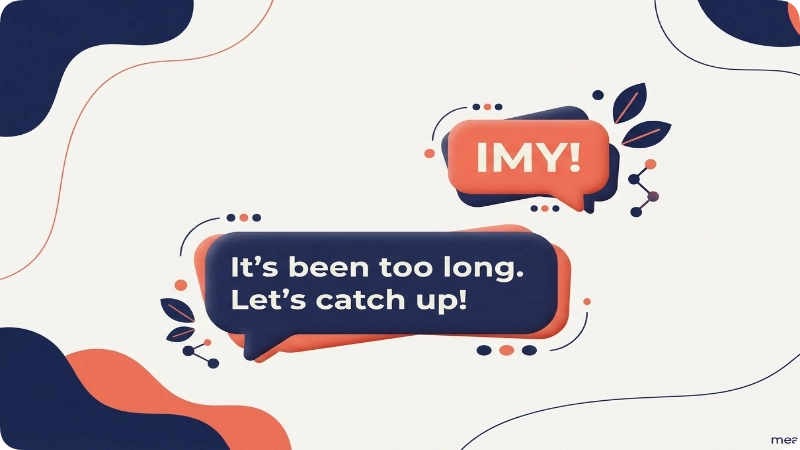
The following fictional conversations show how IMY can appear naturally in different situations.
Example 1: Between Close Friends
Person A: “Can’t believe it’s been three months since we met up.”
Person B: “I know! IMY so much.”
Person A: “Miss you too. Coffee next weekend?”
Interpretation: Person B misses their friend, and the conversation naturally turns toward making plans.
Example 2: In a Romantic Relationship
Person A: “Just got back to my hotel.”
Person B: “Glad you made it safely. imy ❤️”
Person A: “I miss you too. Calling you tonight!”
Interpretation: IMY communicates affection while the couple is physically apart.
Example 3: After Losing Touch
Person A: “Hey! Found an old picture of us today.”
Person B: “No way! Send it.”
Person A: “Haha, we looked so different. IMY!”
Interpretation: The sender is remembering the friendship and expressing a desire for connection.
Example 4: A Playful Message
Person A: “I literally just left your house.”
Person B: “And? IMY already 😂”
Person A: “You’re ridiculous lol.”
Interpretation: IMY is being used playfully. The laughing emoji and short time apart suggest an exaggerated, affectionate tone.
Example 5: A Message From an Ex
Person A: “Hey, hope you’ve been doing well. imy.”
Person B: “Thanks for checking in. Hope you’re doing well too.”
Interpretation: The sender expresses missing someone, but the recipient responds politely without making a romantic commitment.
These examples illustrate why you should interpret IMY as an expression first, rather than treating it as proof of a particular intention.
Is IMY Flirty or Romantic?
IMY can be flirty or romantic, but it isn’t inherently either one.
The phrase “I miss you” can be used with friends, relatives, and romantic partners. Its tone depends on the relationship and surrounding conversation.
A message such as “imy babe ❤️” within an established romantic relationship clearly has a different tone from “imy bestie!” between close friends.
Potential signs of a romantic tone include affectionate nicknames, an existing flirtatious conversation, or plans to spend time together as a couple.
Even then, no single word, abbreviation, or emoji can establish someone’s intentions with certainty.
If you’re unsure whether a person is flirting, pay attention to how they communicate over time rather than interpreting one message in isolation.
How Do You Reply to IMY?
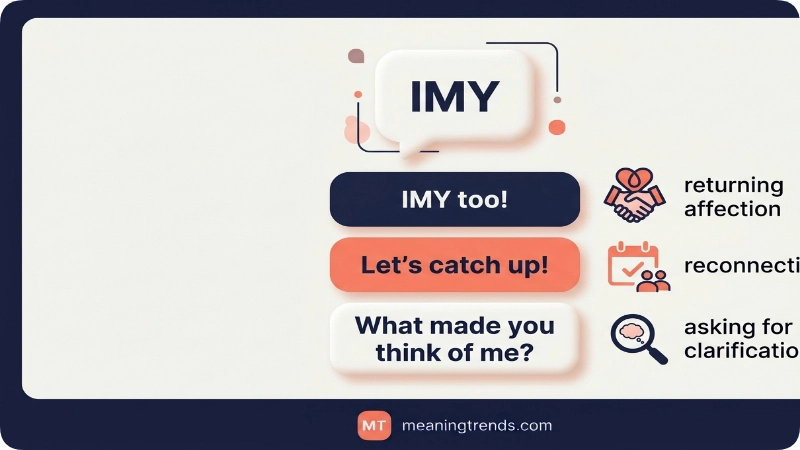
Your response should reflect how you actually feel about the sender.
You don’t have to say “I miss you too” unless you mean it.
Here are several natural options for different situations.
When You Miss Them Too
- “IMY too!”
- “Aww, I miss you so much.”
- “Same here! When can we hang out?”
- “Miss you more ❤️”
These responses acknowledge the affection and return the sentiment.
When You Want to Be Playful
- “You just saw me 😂”
- “Miss me already?”
- “Then come visit!”
- “I was wondering when you’d say that.”
These replies work best when playful teasing is already part of your relationship.
When You Want to Reconnect
- “It’s been too long. Let’s catch up!”
- “I miss hanging out with you. Are you free this weekend?”
- “We really need to plan something soon.”
These responses turn the feeling into a possible next step.
When You’re Not Sure What They Mean
You can ask for clarification without making the conversation awkward.
Try:
- “Aww, what made you think of me?”
- “It’s been a while! How have you been?”
- “That’s sweet. Did something remind you of us?”
These questions allow the sender to explain their feelings naturally.
When You Don’t Feel the Same Way
It’s fine to acknowledge the message without reciprocating.
For example:
- “Thanks for thinking of me.”
- “Hope you’ve been doing well.”
- “I appreciate the message, but I’d rather keep some distance.”
The last response may be appropriate when someone from your past contacts you and you don’t want to reopen the relationship.
A kind response doesn’t require you to share feelings you don’t have.
When Should You Use or Avoid IMY?
IMY works best in informal conversations with people you know personally.
You might use it when messaging a close friend, talking to a romantic partner, or checking in with a family member.
For example:
“Hope your trip is going well! IMY!”
The abbreviation fits because the conversation is personal and relaxed.
However, IMY may be inappropriate in formal or professional communication. In a business email, for example, a clearer and more suitable expression might be “It was great working with you” or “I look forward to seeing you again,” depending on what you mean.
You should also consider how close you are to the recipient. Sending “imy” to someone you barely know may feel unexpectedly personal.
When you want to express genuine emotion clearly, writing “I miss you” in full can be more direct.
How Is IMY Different From ILY, IMYSM, and IMYT?
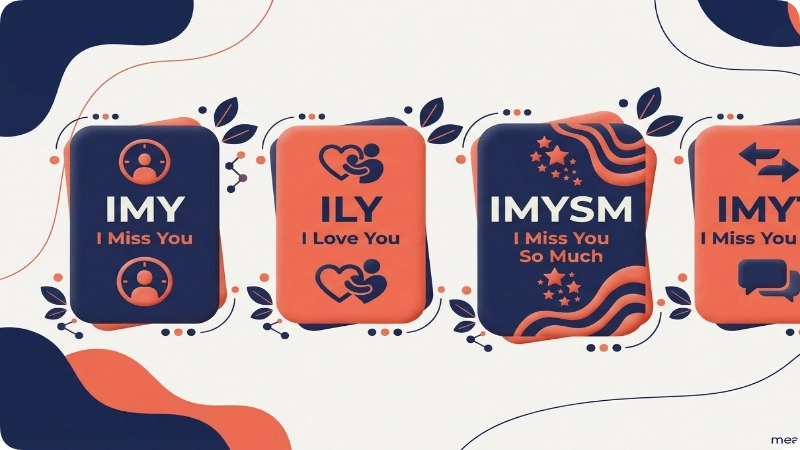
Several texting abbreviations express affection, but they don’t all communicate the same thing.
| Expression | Meaning | Typical use | Key distinction |
| IMY | I miss you | Expressing someone’s absence | Focuses on missing someone |
| ILY | I love you | Expressing love | Communicates love rather than absence |
| IMYSM | I miss you so much | Emphasizing how much someone is missed | Stronger wording than IMY |
| IMYT | I miss you too | Responding to IMY | Returns the same sentiment |
| IMU | I miss you | Alternative texting abbreviation | Uses U instead of Y for “you” |
For example, if someone texts “IMYSM,” they’re saying “I miss you so much,” rather than introducing a completely different feeling.
Likewise, “IMYT” is a concise way to respond when someone tells you they miss you.
The distinction between IMY and ILY is especially useful. Missing someone and loving someone can overlap, but one doesn’t automatically establish the other.
Does IMY Mean the Same Thing on Snapchat, Instagram, and WhatsApp?
In ordinary personal messaging, IMY generally keeps the same meaning across platforms: “I miss you.”
You might encounter it in a Snapchat chat, an Instagram direct message, a WhatsApp conversation, or a regular text message.
The platform itself doesn’t establish whether the sender is being romantic or friendly.
For example:
“IMY! Let’s meet soon.”
That message has essentially the same meaning whether it arrives through Instagram or WhatsApp.
What matters more is the conversation surrounding it.
A message attached to an old photo might suggest nostalgia. A message following a goodbye might express immediate longing. A message from someone you haven’t heard from in months might be an attempt to reconnect.
Those are contextual interpretations, not platformspecific definitions.
FAQs About IMY Meaning in Text
What does IMY mean from a girl?
IMY means “I miss you” regardless of the sender’s gender. It may express friendship, affection, or romantic interest, depending on your relationship and the conversation. The sender’s gender alone doesn’t establish their intentions.
What does IMY mean from a guy?
It means “I miss you.” A guy might send it to a friend, family member, or romantic partner. Look at the surrounding messages instead of assuming it always indicates attraction.
Does IMY mean I love you?
No. IMY means “I miss you,” while ILY means “I love you.” Someone can miss you without necessarily expressing romantic love.
What does IMY ❤️ mean?
It means “I miss you” with an added expression of affection. The heart emoji may make the message feel warmer or more romantic, but its exact tone depends on your relationship.
What does IMYSM mean in texting?
IMYSM stands for “I miss you so much.” It’s an extended version of IMY that emphasizes the feeling.
Is IMY rude or offensive?
No. IMY isn’t inherently rude or offensive. It’s generally affectionate, although an unwanted or overly personal message can feel uncomfortable depending on the circumstances.
What should I text back when someone says IMY?
If you feel the same way, you can respond with “IMY too!” or “I miss you too.” If you’re unsure, try “What made you think of me?” You can also acknowledge the message politely without returning the sentiment.
Conclusion
IMY is a simple way to say “I miss you” in a text message. It’s used to express affection, longing, or the desire to reconnect with someone. Although the definition is straightforward, the feelings behind it can vary depending on the relationship and situation. A friend may use it nostalgically, while a romantic partner may use it to express closeness.
When someone sends you IMY, consider the surrounding conversation before deciding what they intend. You can respond warmly if you miss them too, suggest making plans if you’d like to reconnect, or ask a natural followup question if the message feels unclear.
Most importantly, don’t feel pressured to match someone else’s emotional tone. A thoughtful reply that reflects your actual feelings is better than assuming those three letters mean more than the conversation supports.

Alex writes about the words and shortcuts people use in texts, group chats, and social media. Each guide explains the meaning with everyday examples and tips on when to use it