QUICK ANSWER
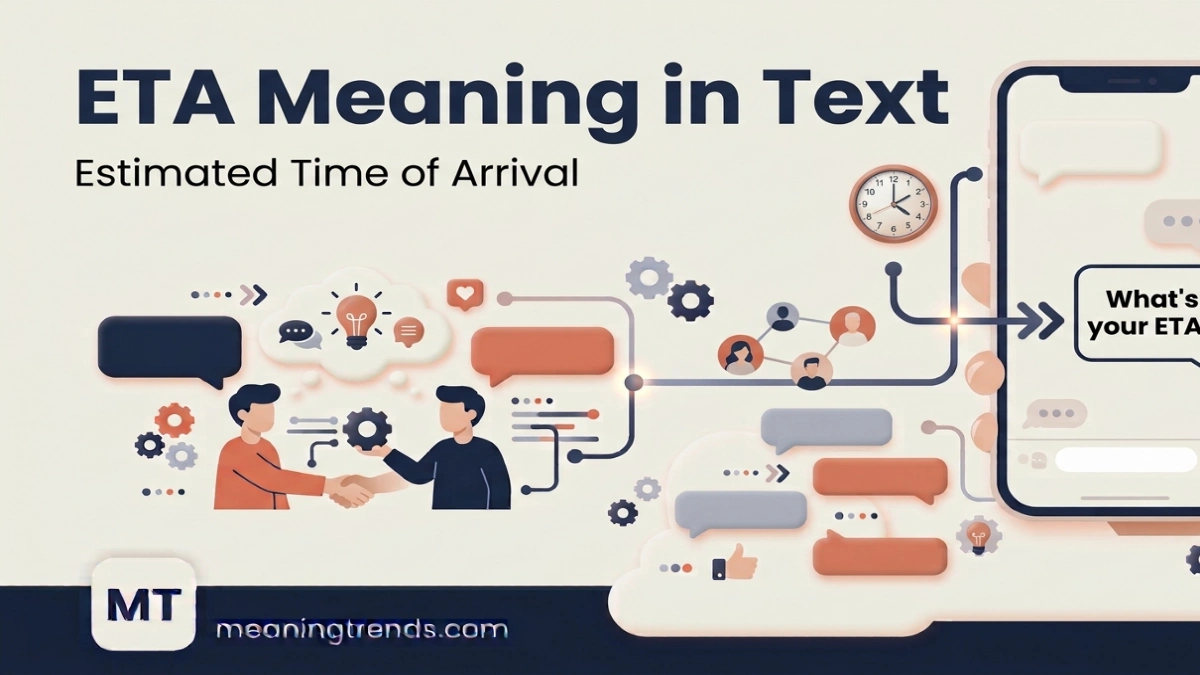
ETA means “Estimated Time of Arrival.” In text messages, it refers to the time someone or something is expected to arrive at a particular place. When someone asks, “What’s your ETA?” they want to know when you’ll get there. In some online discussion forums, ETA can also mean “Edited to Add.”
Imagine a friend texting, “What’s your ETA? We’re waiting outside.” They’re simply asking when you expect to arrive.
You’re making plans with a friend when a short message appears: “ETA?” Perhaps a coworker sends it before a meeting, or someone asks about your delivery. Although the abbreviation is brief, understanding what the sender wants can make your response much easier.
ETA is useful because it communicates timing without requiring a long explanation. However, the exact meaning depends on the conversation. A question about meeting someone usually concerns arrival time, while an abbreviation added to an online discussion post may have a different purpose.
Knowing the usual meaning, alternative usage, and natural ways to respond helps you understand ETA without misreading the sender’s intention.
What Does ETA Mean?
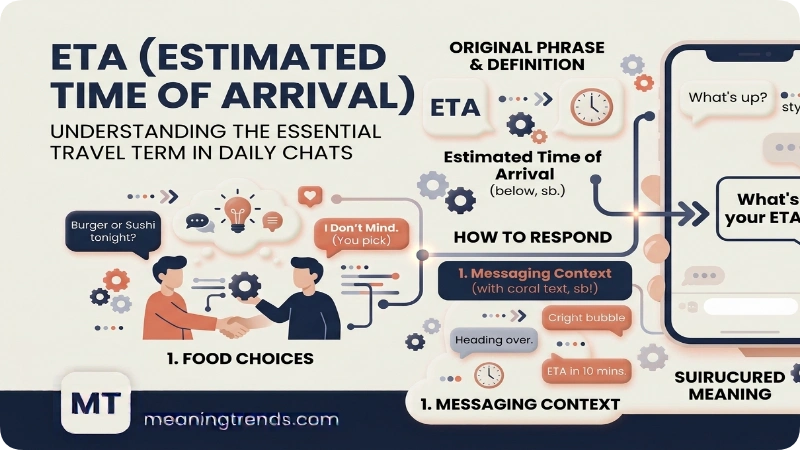
ETA stands for Estimated Time of Arrival. It’s an abbreviation used to communicate when a person, vehicle, delivery, or other expected arrival is likely to happen.
In everyday texting, people use ETA to coordinate plans and share timing information.
For example:
- “What’s your ETA?” means “When do you expect to arrive?”
- “My ETA is 6:30 PM” means “I expect to arrive at 6:30 PM.”
- “The delivery ETA is tomorrow” means “The delivery is expected to arrive tomorrow.”
The important word is estimated. An ETA is a prediction, not a guaranteed arrival time. Traffic, weather, transportation delays, and other unexpected circumstances can change it.
ETA isn’t exclusively internet slang. It’s an established abbreviation used in transportation, travel, business, and everyday communication.
What Does Each Letter in ETA Stand For?
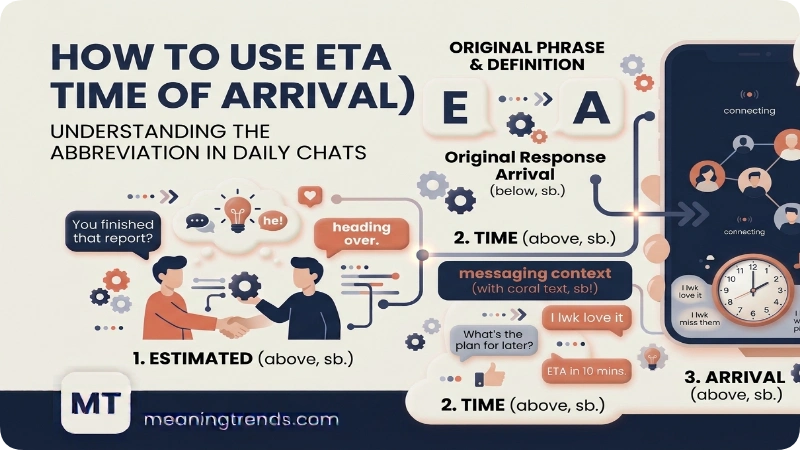
ETA is an initialism because each letter represents part of a longer expression.
Here’s the breakdown:
| Letter | Word |
| E | Estimated |
| T | Time |
| A | Arrival |
Together, the letters form Estimated Time of Arrival.
People generally pronounce ETA by saying each letter separately: “ETA.”
You don’t need to write the full expression every time. ETA is widely understood in ordinary conversations where arrival times are relevant.
Why Do People Use ETA in Text Messages?
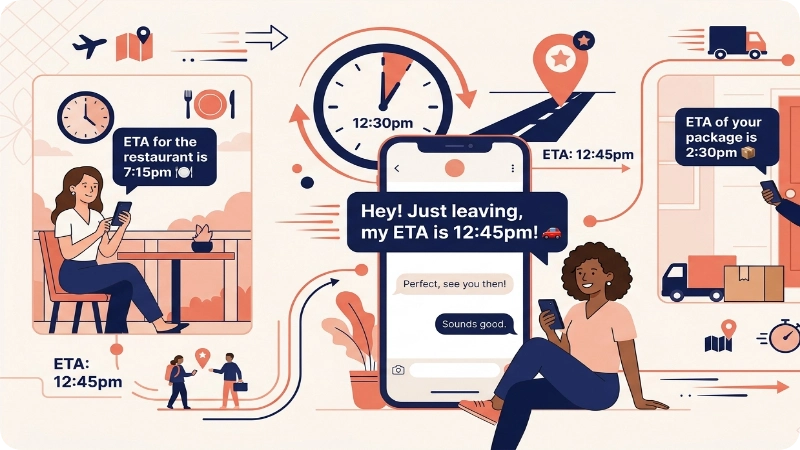
People use ETA because it’s a convenient way to ask about or communicate arrival times.
Instead of typing an entire question, someone can simply send “ETA?” and expect the other person to understand.
There are several practical reasons to use it:
- Making plans: Friends can coordinate when to meet at a restaurant, party, or other location.
- Avoiding unnecessary waiting: Someone can decide If to wait or start an activity.
- Sharing travel updates: Drivers and passengers can communicate expected arrival times.
- Tracking deliveries: Customers can ask when a package or order is expected.
- Work coordination: Colleagues can check when someone will reach an office, meeting, or appointment.
ETA also makes communication more efficient when several people need the same timing information.
For example, a person organizing a group dinner might ask everyone for their ETA to determine when the group can begin eating.
What Else Can ETA Mean?
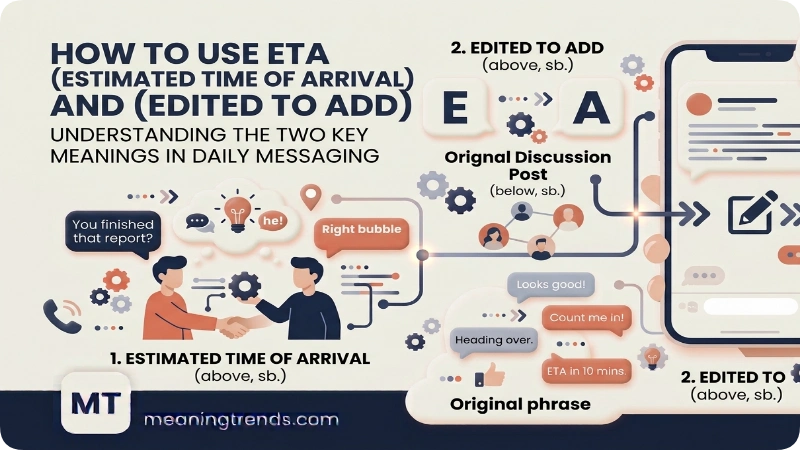
Although Estimated Time of Arrival is the standard meaning in everyday messaging, ETA has another documented use in certain online communities.
1. Estimated Time of Arrival
This is the usual interpretation in ordinary conversations involving travel, meetings, deliveries, and expected arrivals.
Example:
Person A: “Are you close?”
Person B: “Yes, ETA is 10 minutes.”
Meaning: The person expects to arrive in approximately 10 minutes.
2. Edited to Add
In online discussion forums and some written posts, ETA can mean Edited to Add.
Writers sometimes place it before additional information they’ve included after publishing their original message.
Example:
“I finally found the restaurant I was looking for.
ETA: It’s called Green Garden Cafe.”
Meaning: The writer edited the original post to include an additional detail.
This interpretation is associated with editing written posts rather than coordinating someone’s arrival.
How can you tell the difference? Look at the surrounding words. If the conversation involves travel, timing, or meeting arrangements, Estimated Time of Arrival makes sense. If ETA appears before an additional explanation in an edited post, Edited to Add may be intended.
How Does Context Change the Meaning of ETA?
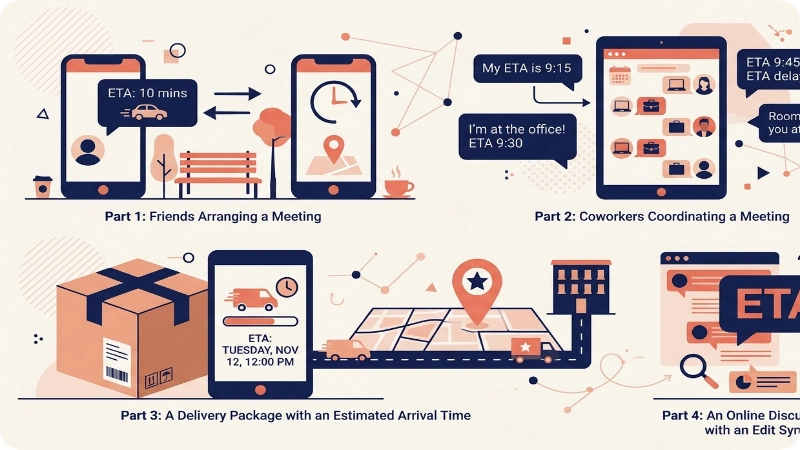
The surrounding conversation helps establish what someone means by ETA. The same abbreviation can appear in different situations without changing its basic purpose.
Consider these examples.
When a Friend Sends ETA
If a friend asks “ETA?” while you’re traveling to meet them, they’re probably asking when you expect to arrive.
Example:
Person A: “I’m leaving home now.”
Person B: “Okay, ETA?”
Interpretation: Person B wants an approximate arrival time.
When a Coworker Sends ETA
In a professional conversation, ETA may refer to when someone will arrive at the office, join a meeting, or complete an expected delivery.
Example:
Coworker A: “Are you joining the client meeting?”
Coworker B: “Yes. ETA is 9:15.”
Interpretation: The coworker expects to arrive or join around 9:15.
When Someone Asks About a Delivery
ETA can refer to the expected arrival of a package, food order, or other shipment.
Example:
Person A: “Have you checked the package?”
Person B: “The latest ETA is Friday.”
Interpretation: The package is expected to arrive on Friday.
When ETA Appears in an Online Post
If someone writes ETA before adding another detail to a discussion, it may mean Edited to Add.
Example:
“ETA: I forgot to mention that parking is free.”
Interpretation: The writer has added information to the original post.
Remember that context helps identify the intended meaning, but it doesn’t automatically reveal the sender’s feelings or motives.
Examples of ETA in Conversation
Here are some natural examples showing how ETA works in everyday communication.
Example 1: Meeting a Friend
Person A: “We’re already at the coffee shop.”
Person B: “My ETA is 15 minutes.”
Meaning: Person B expects to reach the coffee shop in approximately 15 minutes.
Example 2: Asking About Travel
Person A: “What’s your ETA?”
Person B: “Around 7 PM, depending on traffic.”
Meaning: Person A wants to know when Person B expects to arrive.
Example 3: Family Plans
Person A: “Dinner starts at 8. Will you make it?”
Person B: “Yes, ETA 7:45.”
Meaning: Person B expects to arrive before dinner begins.
Example 4: Food Delivery
Person A: “Did the restaurant give you an ETA?”
Person B: “They said about 30 minutes.”
Meaning: They’re discussing the expected delivery time.
Example 5: Workplace Communication
Manager: “What’s the ETA on the presentation?”
Employee: “I should have it ready by 3 PM.”
Meaning: Here, the question concerns the expected completion time rather than physical travel. The sender is using ETA informally to ask when something will be ready.
Example 6: Online Discussion
Person A: “The instructions are in my original post.”
Person B: “I couldn’t find the second step.”
Person A: “ETA: I’ve added the missing step below.”
Meaning: ETA means Edited to Add in this writtenpost context.
Is ETA Rude or Impolite?
No. ETA is generally a neutral abbreviation. It isn’t inherently rude, offensive, romantic, or flirtatious.
However, the way someone uses it can affect how the message feels.
For example:
- “What’s your ETA?” usually sounds like a straightforward question.
- “ETA please?” can sound polite and direct.
- “ETA?? You’ve been gone for an hour!” may sound impatient because of the surrounding wording.
- “No rush, just send me your ETA when you can” sounds considerate.
The relationship between the people also matters. A friend checking when you’ll arrive may simply be coordinating plans. A manager asking for an ETA may need to organize a schedule.
Don’t assume someone is angry just because they send a short message such as “ETA?” If you’re unsure about their tone, consider the conversation as a whole.
How Do You Reply to ETA in Text?
If someone asks for your ETA, the easiest response is to provide an honest estimate of when you expect to arrive.
You don’t need to write a complicated explanation.
Here are some natural replies:
| Situation | Example Reply |
| You’re almost there | “About 5 minutes.” |
| You’re traveling | “ETA is 20 minutes.” |
| You’re stuck in traffic | “Around 30 minutes, traffic is heavy.” |
| You’re not sure | “Not sure yet. I’ll update you.” |
| You’re running late | “Sorry, I’ll probably arrive around 7:30.” |
| You’re already there | “I’m here now!” |
If someone asks about a delivery or project rather than your physical arrival, provide the expected completion or delivery time.
For example:
“ETA is tomorrow afternoon, according to the latest update.”
The most important thing is to avoid giving a precise time when you don’t have enough information. An approximate estimate is better than a misleading promise.
What Are Other Ways to Say ETA?
If you want to avoid abbreviations or make your message easier to understand, you can use a fuller expression.
Here are some alternatives:
- When will you arrive? A natural, direct question.
- What time will you get here? A friendly, conversational alternative.
- Expected arrival time: A clear, slightly more formal expression.
- Estimated arrival: A concise alternative for travel or delivery updates.
- When should I expect you? A polite way to ask someone about their arrival.
- Arrival time: A straightforward alternative in written communication.
In professional settings, writing “estimated arrival time” or “expected completion time” may provide greater clarity, especially when the subject isn’t physical travel.
FAQs
1. What does ETA mean when someone texts you?
ETA means Estimated Time of Arrival. When someone texts you “ETA?”, they’re generally asking when you expect to reach your destination.
2. Does ETA mean estimated time of arrival?
Yes. Estimated Time of Arrival is the established expansion of ETA in travel, transportation, and everyday communication.
3. What does “What’s your ETA?” mean?
It means “When do you expect to arrive?” The person wants an approximate time so they can coordinate plans or know when to expect you.
4. Does ETA mean the exact arrival time?
No. ETA is an estimate rather than a guaranteed arrival time. Delays and changing circumstances can affect it.
5. Can ETA mean Edited to Add?
Yes. In some online discussion forums and written posts, ETA means Edited to Add. Context determines If this interpretation or Estimated Time of Arrival makes sense.
6. Is ETA formal or informal?
ETA is suitable for casual conversations and many professional situations. However, spelling out “estimated time of arrival” can be clearer in formal documents or when communicating with someone unfamiliar with the abbreviation.
7. How do you pronounce ETA?
ETA is generally pronounced by saying its three letters individually: “ETA.”
8. What does ETA mean in a work message?
In workplace communication, ETA usually asks when someone or something is expected to arrive or be ready. For example, “What’s the ETA on the report?” asks when the report is expected to be completed.
Conclusion
ETA is a useful abbreviation that makes everyday communication quicker and easier. Its established meaning is Estimated Time of Arrival, and people use it to ask when someone, a delivery, or another expected arrival will reach its destination. It can also be used informally to ask when a task or item will be ready.
The most important thing to remember is that an ETA is an estimate, not a promise. Travel delays, changing schedules, and unexpected circumstances can affect the expected time. In certain online discussion forums, ETA can also mean Edited to Add, so the surrounding message matters.
If someone texts you “What’s your ETA?”, simply give them your best arrival estimate. If you’re uncertain, say so and offer to update them when you know more. A short, honest response is usually all that’s needed to keep everyone informed and avoid unnecessary confusion.

Alex writes about the words and shortcuts people use in texts, group chats, and social media. Each guide explains the meaning with everyday examples and tips on when to use it