The blue heart emoji commonly expresses affection, friendship, support, loyalty, or appreciation. It can communicate warmth without necessarily suggesting romance. However, it doesn’t have one fixed meaning. The sender’s relationship with you, the surrounding message, and the conversation’s tone help determine what the blue heart means.
Someone sends you a blue heart after a thoughtful conversation. Is it a sign of friendship, a subtle romantic hint, or simply a nice way to say thank you?
Unlike a written sentence, a heart emoji leaves room for interpretation. A blue heart beside “I’m proud of you” may emphasize encouragement, while the same emoji after “Miss you” may feel more affectionate. Sometimes, the sender simply likes the color blue.
Understanding these differences can help you respond naturally without assuming more than the message actually says.
What Does the Blue Heart Emoji Mean?
The blue heart is part of the Unicode emoji collection. Unicode identifies it as “blue heart,” while its emotional meaning depends on how people use it.
According to Emojipedia’s descriptions of heart emojis, colored hearts can express affection and other positive feelings, with interpretations shaped by context.
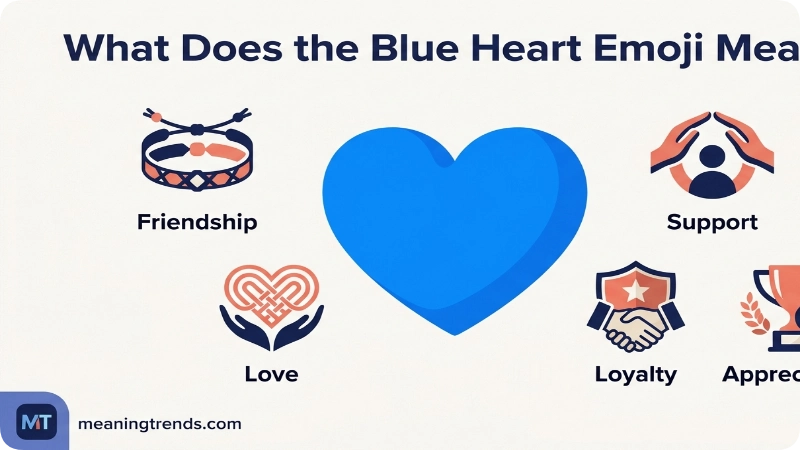
In everyday messages, a blue heart may communicate several related ideas:
- Friendship: A warm expression of appreciation for a friend.
- Trust and loyalty: A way to emphasize a dependable or supportive relationship.
- Love and affection: Caring feelings that may be romantic or platonic.
- Emotional support: Encouragement, sympathy, or reassurance.
- Shared identity: Support for a team, cause, or community associated with blue.
- Personal preference: A decorative heart chosen simply because the sender likes blue.
These are possible uses rather than strict definitions. A blue heart does not automatically promise loyalty, identify a relationship, or reveal someone’s feelings.
For example:
“Thanks for always being there for me “
Here, the blue heart reinforces gratitude and affection. It doesn’t establish If the relationship is romantic.
What Does a Blue Heart Mean in Texting?
In text messages, the blue heart often adds warmth to words that might otherwise sound neutral.
Consider the difference between these messages:
“Thanks for helping me.”
“Thanks for helping me “
Both express gratitude, but the second may feel more personal or affectionate.
The blue heart can serve several conversational purposes.
Showing friendship and appreciation
Friends may use to express care without making a romantic declaration.
For example:
“You’re seriously the best “
The emoji strengthens a friendly compliment. It may communicate closeness, but the message alone doesn’t indicate attraction.
Offering comfort and encouragement
A blue heart can accompany supportive messages during stressful or emotional situations.
For example:
“I know today was difficult. I’m here for you “
The surrounding words make reassurance the strongest interpretation.
Expressing affection
People in romantic relationships may also use blue hearts.
For example:
“Goodnight, love “
Here, the affectionate wording and established relationship make a romantic interpretation reasonable.
The important distinction is that the relationship and message provide the romantic meaning, not the blue color by itself.
Does the Blue Heart Emoji Mean Love or Friendship?
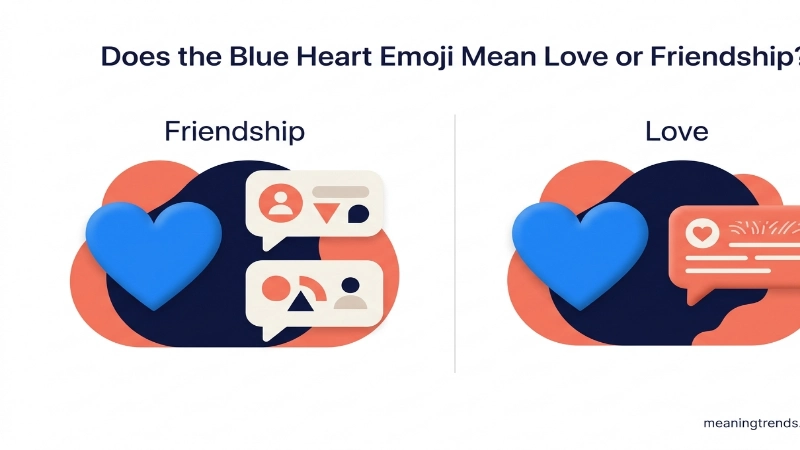
It can mean either.
The blue heart is not exclusively a friendship emoji, and it isn’t a universal signal of romantic love.
A person might send to a close friend, romantic partner, family member, teammate, or someone they appreciate.
| Situation | Possible meaning | What matters most |
| Close friends chatting | Friendship and appreciation | Their usual communication style |
| Romantic partners texting | Love and affection | The existing relationship |
| Someone offering comfort | Sympathy and support | The emotional topic |
| A team related post | Enthusiasm or solidarity | Team colors and subject |
| A casual social media comment | Approval or friendliness | The post and surrounding text |
If you’re trying to understand If someone likes you romantically, look at their communication over time.
Do they initiate conversations, express interest directly, or make plans to spend time together? Those behaviors provide more meaningful context than the color of a single heart.
What Does a Blue Heart Mean From a Girl or Guy?
A blue heart doesn’t have a separate established meaning based on If a girl or guy sends it.
When a girl sends
Depending on the conversation, she may be expressing friendliness, affection, appreciation, or encouragement.
For example:
“Had so much fun today “
This sounds positive and warm. If it suggests romantic interest depends on the relationship and other clues.
When a guy sends
The same possibilities apply.
For example:
“Take care of yourself “
This may communicate genuine concern or affection, but it doesn’t prove romantic interest.
Gender alone cannot tell you what the emoji means. Individual communication habits and the actual words are more useful.
If you’re uncertain, avoid treating the emoji as a hidden code that needs decoding.
How Does Context Change the Blue Heart Emoji Meaning?
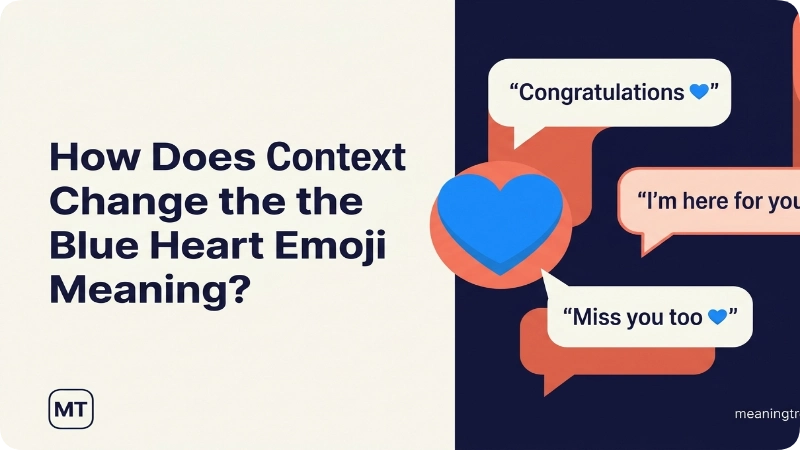
Context is the most reliable way to interpret in a particular conversation.
Look at the accompanying words
“Congratulations ” suggests celebration, while “I’m sorry you’re going through this ” suggests sympathy.
Consider your relationship
The same emoji may feel different coming from a close friend, romantic partner, coworker, or unfamiliar person.
Notice previous messages
Someone who regularly uses blue hearts with everyone may simply prefer that emoji.
Consider the topic and colors
A blue heart in a post about a blue uniformed sports team may reflect team support rather than personal affection.
A useful rule is to interpret the words first and the emoji second.
If the surrounding message is ambiguous, the emoji usually cannot resolve that ambiguity on its own.
Examples of the Blue Heart Emoji in Conversations
These illustrative conversations show how the same symbol can work in different situations.
Example 1: Friendship
Person A: “Thanks for listening to me yesterday.”
Person B: “Always here for you “
Meaning: The blue heart reinforces friendship, care, and emotional support.
Example 2: Romantic affection
Person A: “I already miss you.”
Person B: “Miss you too, babe “
Meaning: The affectionate language suggests romantic love. The blue heart adds warmth.
Example 3: Congratulations
Person A: “I finally passed my exam!”
Person B: “I knew you could do it “
Meaning: The emoji emphasizes encouragement and happiness for the other person’s achievement.
Example 4: Comfort
Person A: “I’ve been having a rough week.”
Person B: “Sending you love “
Meaning: The blue heart conveys compassion and emotional support.
Example 5: Casual appreciation
Person A: “Here’s the photo you wanted.”
Person B: “Perfect, thank you “
Meaning: The emoji makes the thanks feel friendlier. It doesn’t necessarily carry deeper emotional significance.
Example 6: Team support
Person A: “Big game tonight!”
Person B: “Let’s go! “
Meaning: If the team uses blue as an identifying color, the heart may express enthusiasm or loyalty to that team.
These examples illustrate possible interpretations, not universal rules.
Is the Blue Heart Emoji Flirty?
A blue heart can be flirty, but it isn’t inherently flirtatious.
For instance:
“Can’t wait to see you again “
This could be romantic when sent between people who are dating or showing mutual interest. Between longtime friends, it could be entirely platonic.
Likewise, someone who sends only ” ” in response to a compliment may be acknowledging it warmly without intending to flirt.
Potential clues of romantic interest include affectionate wording, explicit compliments, invitations to spend time together, and a broader pattern of mutual interest.
Even then, those clues are interpretations rather than proof.
Don’t assume that a blue heart means someone has a crush on you. If the relationship matters, clear communication is more dependable than emoji analysis.
Blue Heart vs. Red Heart ❤️: What’s the Difference?
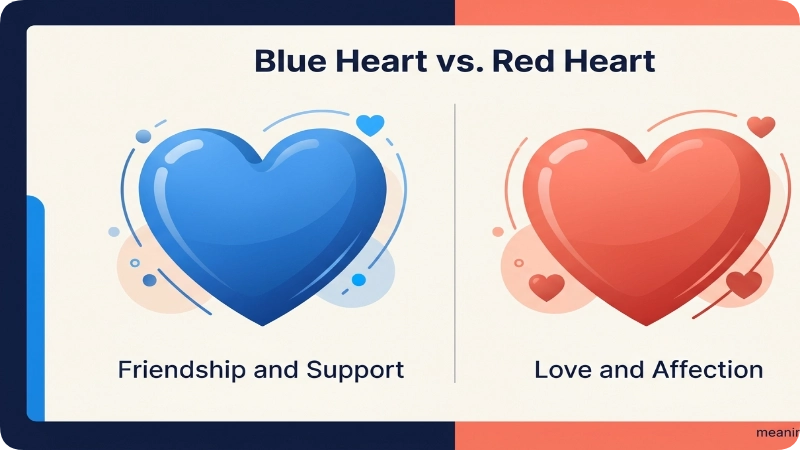
Both emojis can communicate affection, but people sometimes choose them for different emotional impressions.
| Emoji | Possible meaning | Typical use | Key distinction |
| ❤️ Red heart | Love, strong affection, appreciation | Romantic or heartfelt messages | Often associated with conventional expressions of love |
| Blue heart | Affection, friendship, support, loyalty | Friendly messages, relationships, team support | Can feel less overtly romantic |
| 💚 Green heart | Affection, nature related themes, green associated identities | Friendly or themed messages | Color associations may shape the context |
| 💛 Yellow heart | Affection, happiness, friendliness | Cheerful and supportive messages | May feel bright and upbeat |
| 💜 Purple heart | Affection, support, purple associated communities | Personal or community messages | Can reflect specific color based associations |
| 🩵 Light blue heart | Affection, tenderness, light blue aesthetics | Friendly or affectionate messages | A different shade, without a fixed emotional rule |
These differences describe possible associations, not an official emotional ranking.
There is no universal system in which a red heart always means romance, a blue heart always means friendship, and a yellow heart always means happiness.
People use colored hearts creatively and inconsistently.
What Does the Blue Heart Mean on Social Media?
On social media, may express affection, approval, encouragement, or solidarity.
Its meaning can shift depending on the post and the community using it.
A blue heart in a comment may be a friendly compliment or a supportive reaction.
For example:
“Beautiful pictures “
The commenter may simply be expressing appreciation.
TikTok
A blue heart in a caption or comment can reinforce a positive message, express affection, or match the visual theme of a video.
A creator might use several blue hearts because blue matches their content’s colors.
That doesn’t necessarily introduce a separate coded meaning.
Snapchat
In a Snapchat message, the blue heart can carry the same conversational meanings it does in ordinary texting.
It should not be confused with Snapchat’s built in friendship indicators, which are separate interface features.
A blue heart someone manually sends in a chat is not, by itself, proof of a particular Snapchat friendship status.
Facebook and other platforms
Blue hearts may appear in supportive comments, celebrations, and posts about causes or groups associated with blue.
The underlying principle remains consistent: a heart’s color may add an association, but the surrounding message provides the strongest clue.
Can the Blue Heart Emoji Represent a Cause or Community?
Yes. A blue heart may sometimes function as a symbol of support for a cause, organization, team, or community.
For example, the blue heart is used in some autism awareness and acceptance related messaging, although color symbolism and preferred representations vary among autistic people and advocacy communities.
The United Nations Office on Drugs and Crime has also used the Blue Heart as a symbol in its Blue Heart Campaign against human trafficking.
These are specific, context dependent uses. They do not establish that every blue heart in a text message refers to either subject.
When the emoji appears beside a campaign name, hashtag, organization, or related statement, that context may clarify its intended association.
Without those clues, it’s better not to assign a specialized meaning.
How Should You Reply to a Blue Heart Emoji?
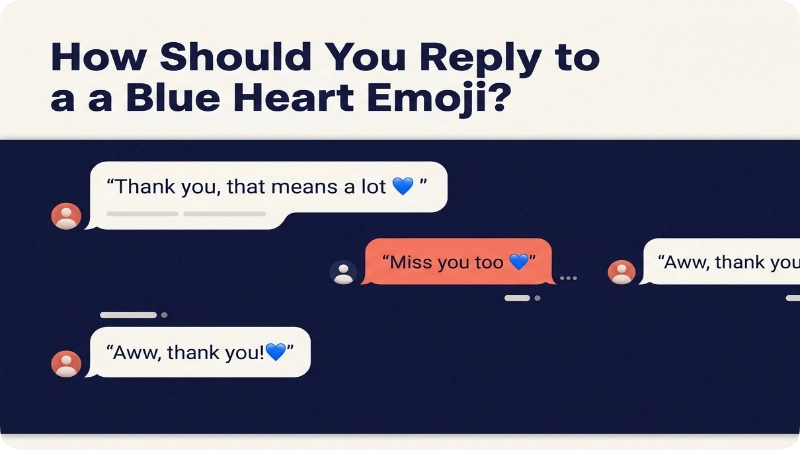
You don’t need a complicated response. The best reply depends on the message and how comfortable you feel expressing affection.
| Situation | Natural reply |
| A friend sends encouragement | “Thank you, that means a lot “ |
| Someone says they miss you | “Miss you too “ |
| A person congratulates you | “Thanks so much!” |
| Your partner sends affection | “Love you “ |
| Someone sends a heart alone | ” ” or “Aww, thank you!” |
| You’re unsure what they mean | “That’s sweet of you 😊” |
You can mirror the blue heart if that feels natural, but you don’t have to.
A written response can be clearer when the conversation involves something important.
If you’re unsure If a message is romantic, you can ask a gentle question such as:
“That was sweet. Were you being flirty?”
Use a question like that only when your relationship makes it appropriate. A heart emoji alone doesn’t require clarification.
When Should You Use or Avoid the Blue Heart?
The blue heart works well in casual, friendly, and affectionate communication.
You might use it when thanking a friend, encouraging someone, celebrating an achievement, or expressing care for a partner.
It can also fit a social media caption when blue is relevant to the topic or visual design.
However, consider avoiding emojis in formal documents, sensitive professional conversations, or situations where emotional meaning needs to be completely clear.
For example, a message such as “I appreciate your support” is more direct in a formal workplace setting than simply sending .
In emotionally sensitive conversations, words also matter more than symbols.
Instead of responding to difficult news with only a blue heart, you might write:
“I’m sorry you’re dealing with this. I’m here if you want to talk “
The sentence communicates support explicitly, while the emoji adds warmth.
FAQs About the Blue Heart Emoji Meaning
Does mean I love you?
It can express love, but it doesn’t automatically mean “I love you.” Romantic wording, relationship context, and the sender’s communication habits matter.
Does a blue heart mean friendzone?
No. A blue heart is not an established signal that someone sees you only as a friend. It can be used in both romantic and platonic relationships.
Is the blue heart a sign of loyalty?
It can suggest loyalty or dependable support, particularly when paired with words about friendship, trust, or commitment. The emoji alone doesn’t establish a promise.
What does mean from a crush?
It may indicate affection, friendliness, appreciation, or flirtation. Look for other signs of interest rather than relying on one emoji.
Does mean sadness?
Not inherently. Although blue can be associated with sadness in English expressions, the blue heart is often used positively. In a sympathetic message, it may communicate comfort rather than sadness itself.
What does two blue hearts mean?
Two blue hearts may add emphasis to affection, appreciation, or support. Repetition doesn’t create a separate fixed meaning.
Is the blue heart more serious than the red heart?
There is no universal seriousness scale for heart emojis. A person’s choice may reflect personal preference, emotional tone, or a particular context.
Can I send a blue heart to someone I’m dating?
Yes. A blue heart can be a natural expression of affection between romantic partners. It doesn’t automatically suggest less love than a red heart.
Conclusion
The blue heart emoji is a flexible expression of care, affection, friendship, appreciation, and support. It can appear in romantic conversations, friendly messages, encouraging comments, or posts about a shared cause. Its color may influence the impression it creates, but it doesn’t give the symbol one universal emotional definition. The most important clue is the message surrounding it.
When someone sends you a blue heart, consider what they said, your relationship, and how they usually communicate. If the message is friendly, respond warmly. If it’s romantic, you can return the affection when you feel comfortable. And if you’re unsure, a simple question is more reliable than guessing at hidden intentions.
Ultimately, the blue heart works best as an addition to communication, not a replacement for it. The words, actions, and relationship behind the emoji are what give it meaning.

Alex writes about the words and shortcuts people use in texts, group chats, and social media. Each guide explains the meaning with everyday examples and tips on when to use it