QUICK ANSWER
Meaning in text refers to what a word, phrase, abbreviation, emoji, or written message communicates in a particular context. A message can have a literal meaning and a separate implied tone or purpose. The surrounding conversation, the relationship between the people communicating, and the words used together can help clarify the intended meaning.
For example, “Sure.” can express agreement, while the same word in a tense conversation may sound reluctant. The word alone does not prove either interpretation.
When someone searches for “meaning in text,” they may be asking what a particular expression means in a text message, what a written passage communicates, or how to interpret the meaning behind someone’s words. The right explanation depends on which of these they have in mind.
Text messages leave out many of the cues people use in face to face conversations, such as vocal tone, facial expressions, and pauses. That makes context especially important. A short reply can be straightforward, playful, formal, or ambiguous without changing its basic dictionary definition.
Understanding written communication means looking at what the words say, what they suggest in context, and what remains uncertain. This distinction helps you interpret messages more accurately without assuming you know exactly what another person intended.
What Does Meaning in Text Mean?
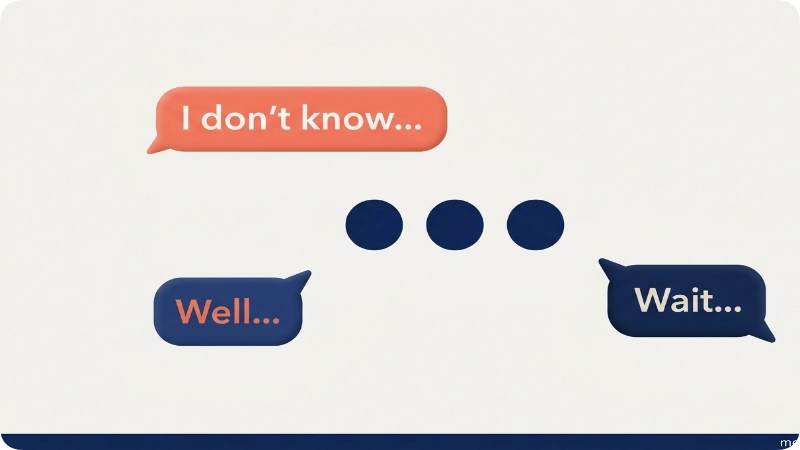
The expression “meaning in text” generally refers to the information, idea, or intention communicated through written words and other textual elements. Its precise meaning depends on how the expression is used.
There are two common ways to understand the phrase.
- The meaning of a word or expression in a text message: Someone wants to know what a particular abbreviation, slang term, phrase, or emoji means in a conversation.
- The meaning of a written text: Someone wants to understand the main idea, message, implication, or purpose of a passage, paragraph, or longer piece of writing.
For example, if someone asks, “What does ‘IDK’ mean in text?” they want an explanation of an abbreviation used in digital communication. If a student asks, “What is the meaning of this text?” they may want the central idea of a passage rather than a definition of one word.
These questions are related, but they require different answers. The first focuses on a specific expression; the second focuses on a larger piece of writing.
Literal meaning versus implied meaning
A useful distinction is the difference between what a message explicitly says and what a reader might infer from it.
Consider this message:
“That’s interesting.”
Its literal meaning indicates that something has attracted the speaker’s interest. Depending on the conversation, it might also communicate genuine curiosity, polite acknowledgment, surprise, or skepticism.
Those additional interpretations are possibilities, not automatic definitions. The surrounding conversation must support them before a reader treats one as the likely explanation.
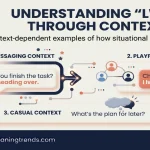
Why Does Context Matter When Interpreting Text?
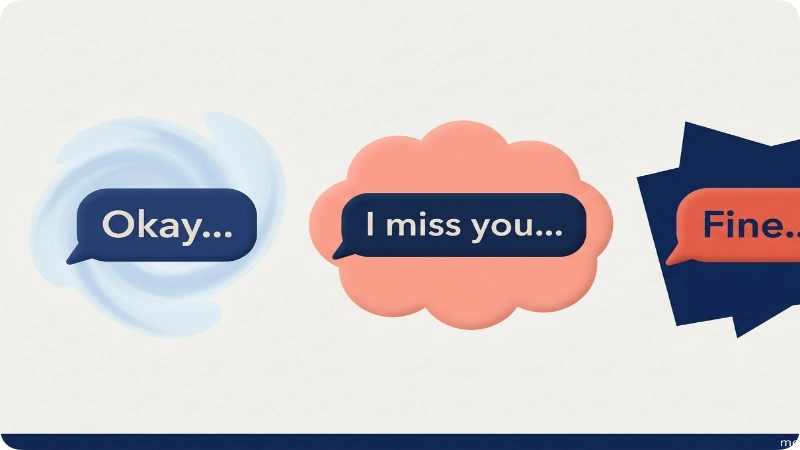
Words rarely communicate every detail of a conversation on their own. Context helps readers determine which meaning fits the situation and If a message carries additional emotional or practical significance.
Four clues are especially useful.
1. The surrounding words
Read the entire sentence or exchange rather than interpreting one word in isolation.
For example:
- “That’s sick! I love the design.” The positive follow up supports an enthusiastic reading of “sick” as slang for something impressive.
- “He’s sick and can’t come today.” Here, the word refers to illness.
The same spelling can communicate different things because the surrounding words establish the relevant meaning.
2. The previous conversation
A short response often depends on what came before it.
Suppose someone asks, “Do you want to get coffee tomorrow?” and receives the reply, “Maybe.”
The response indicates uncertainty or a lack of commitment. It does not establish If the person is busy, uninterested, undecided, or waiting to check their schedule.
A follow up question may resolve the uncertainty more reliably than speculation.
3. The relationship between the people communicating
Friends may use teasing, shorthand, or informal expressions that would sound inappropriate in a workplace email. Colleagues may use brief replies simply because they are busy or discussing a practical task.
Relationship context helps explain which interpretations are plausible. However, it cannot establish someone’s intention by itself.
A brief “OK” from a coworker, for example, may simply acknowledge an instruction. There is no reliable reason to assume that the sender is annoyed without additional evidence.
4. Punctuation, capitalization, and emojis
Written details can influence how a message sounds.
Compare these responses:
- “Okay.” — A straightforward acknowledgment, though context can affect its tone.
- “Okay!” — May sound more enthusiastic or emphatic.
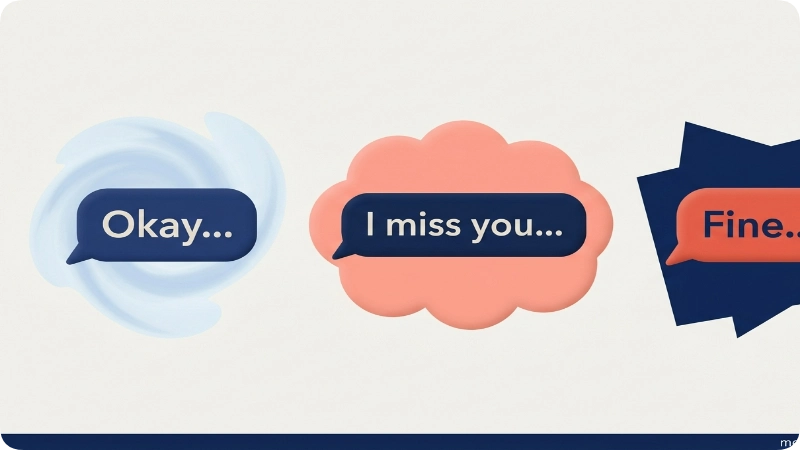
- “OK…” — May suggest hesitation or an unfinished thought, depending on the conversation.
- “Okay 😂” — The emoji may indicate amusement or a playful tone.
These are possible readings, not universal rules. Different people use punctuation and emojis differently, so a single symbol should not be treated as proof of an emotion or motive.
What if I still don’t understand a message?
Ask the sender to clarify instead of guessing. A simple question such as “What do you mean by that?” or “Just checking, do you mean yes?” can resolve confusion without making the conversation uncomfortable.
Does punctuation change the meaning of a text?
Punctuation can affect how a message is perceived, but it doesn’t automatically change the literal definition. A period, exclamation point, or ellipsis may suggest a particular tone in context, yet people have different writing habits.
What Are Other Ways to Say Meaning in Text?
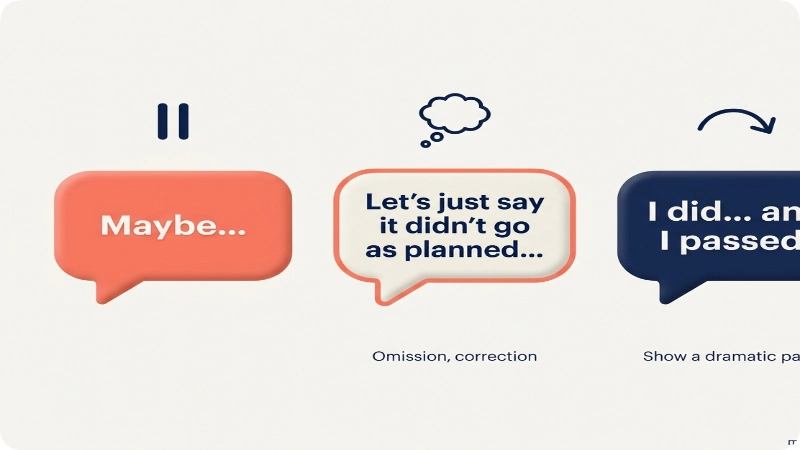
The best alternative depends on what you want to understand.
| Expression | Meaning | Typical use |
| Text message meaning | What an expression communicates in a message | Understanding a word or abbreviation |
| Literal meaning | The direct, explicit definition | Dictionary explanations |
| Implied meaning | What a statement suggests without saying directly | Interpreting indirect communication |
| Contextual meaning | What an expression means in a particular situation | Resolving ambiguous wording |
| Subtext | An underlying idea or feeling suggested by a message | Literary analysis or interpersonal communication |
| Main idea | The central point of a written passage | Reading comprehension |
| Intended meaning | What the writer meant to communicate | Clarifying a potentially confusing statement |
These expressions overlap, but they aren’t interchangeable in every situation. For example, the main idea of an article is different from the possible subtext of a one word text reply.
If you’re searching for the definition of an unfamiliar abbreviation, “text message meaning” may describe your question more precisely. If you’re analyzing a story or article, “main idea” or “contextual meaning” may be more appropriate.
How Do You Reply When a Text Is Unclear?
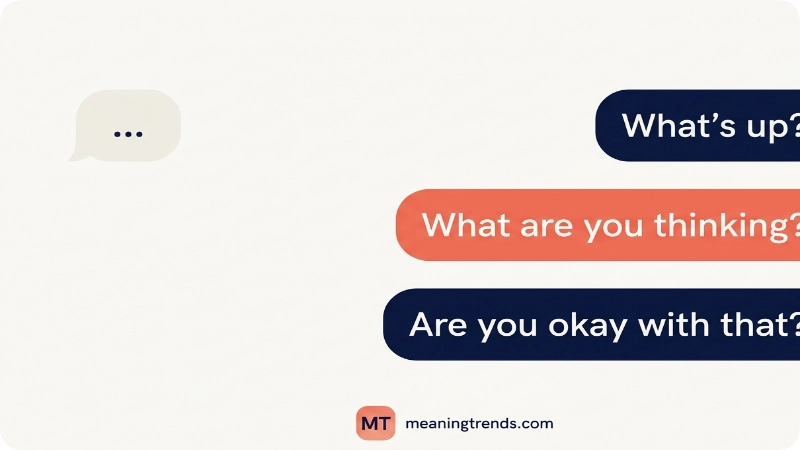
When a message is ambiguous, your response should match the level of uncertainty. You don’t need to turn every short reply into a serious discussion.
Here are a few natural options.
- Direct: “What do you mean by that?”
- Friendly: “I’m not sure I follow. Can you explain?”
- Specific: “When you say ‘later,’ do you mean today or another day?”
- Lighthearted: “Wait, I’m missing something here 😂”
- Professional: “Could you clarify what you mean so I can respond accurately?”
- Boundary setting: “I’m not comfortable guessing what you mean. Could you say that more clearly?”
A specific clarification is often the most useful because it identifies exactly what you don’t understand.
For example, if someone writes “We’ll see,” you could ask, “Should I keep the time open, or would you prefer to decide later?” That question addresses the practical uncertainty without assuming the sender is avoiding you.
If the message concerns a personal, sensitive, or private matter, you can also ask only what you need to know. You don’t have to disclose additional personal information just to make a conversation clearer.
When Should You Use or Avoid Texting Slang?
Texting slang is useful when the people communicating understand the expression and the informal tone suits the situation.
Casual conversations
With friends or people who share your vocabulary, abbreviations and slang can make messages feel relaxed. Expressions such as “LOL” or “BRB” can be appropriate when both people understand them.
However, using an unfamiliar abbreviation without context may create more confusion than it saves.
School and workplace communication
When writing to a teacher, manager, client, or someone you don’t know well, complete wording is often clearer.
Instead of “IDK, maybe,” you could write, “I’m not sure yet. I’ll confirm once I know.”
The longer version communicates the uncertainty and gives the reader a clearer expectation.
Important or sensitive conversations
When discussing plans, boundaries, disagreements, or serious concerns, precise wording is particularly valuable.
A message such as “Fine” may leave the other person guessing about If a decision is final. If clarity matters, write what you actually mean: “That works for me,” “I need more time to decide,” or “I’m not comfortable with that plan.”
The goal isn’t to eliminate slang or make every message formal. It’s to choose wording that suits the audience and makes your meaning as clear as necessary.
Common Mistakes When Interpreting Text
Several interpretation habits can make ordinary messages seem more mysterious than they are.
Assuming every short reply has an emotional meaning. A one word response may be efficient, neutral, or consistent with the sender’s normal style. Brevity alone doesn’t establish annoyance.
Treating slang definitions as universal. An expression may have a specialized meaning in a particular community or conversation. Check the context before applying a definition from another setting.
Confusing an implication with a fact. A message may suggest sarcasm or reluctance, but that doesn’t prove the sender intended either one. Describe uncertain interpretations as possibilities.
Ignoring the sentence around an unfamiliar word. Grammar and surrounding words can eliminate meanings that would otherwise seem plausible.
Assuming every message contains a hidden message. Sometimes a direct statement means exactly what it says. Looking for hidden intentions when there is little supporting evidence can create unnecessary misunderstandings.
A useful rule is to separate three questions: What do the words say? What do they suggest in this situation? What do I still need to clarify?
That approach keeps interpretation grounded in evidence rather than assumptions.
FAQs
Is meaning in text the same as meaning in a text message?
Not always. “Meaning in text” can refer to the interpretation of written language generally or to the meaning of an expression in a text message. The surrounding question determines which sense is intended.
How can I find the meaning of an unfamiliar texting abbreviation?
Read the full message, identify the topic, and look for a definition that fits that context. If several interpretations remain plausible, ask the sender what the abbreviation means rather than assuming one expansion is correct.
Can a text message have a literal and an implied meaning?
Yes. A message can state one thing explicitly while suggesting something additional through context, word choice, or conversational conventions. The implied meaning should be treated as an interpretation unless the available evidence makes the intent clear.
Does an emoji determine the meaning of a message?
No. An emoji can add emotional or conversational context, but its meaning depends on how the sender uses it and what the message says. One emoji cannot reliably establish someone’s feelings or intentions.
What is the difference between text meaning and tone?
Text meaning concerns what the words communicate. Tone concerns how the message comes across, such as friendly, formal, playful, or irritated. The two are related, but a reader can understand the literal meaning while remaining unsure about the tone.
Conclusion
Meaning in text is about understanding written language in the situation where it appears. Sometimes you need a simple definition; other times, you need to interpret a sentence, recognize slang, understand an abbreviation, or work out the possible tone of a message. Knowing which question you’re asking is the first step toward a useful answer.
Context is the most important guide when a message could have more than one interpretation. Read the surrounding words, consider the topic and relationship, and treat punctuation or emojis as clues rather than proof. A possible implication is not necessarily the sender’s actual intention.
When uncertainty remains, ask a brief, natural question instead of relying on assumptions. “Can you clarify what you mean?” works in many everyday situations, while a more specific question can help settle practical details. Clear communication doesn’t require interpreting every hidden signal. It requires understanding what the evidence supports and recognizing when you need more information.

Alex writes about the words and shortcuts people use in texts, group chats, and social media. Each guide explains the meaning with everyday examples and tips on when to use it