Slang usage verified: October 2026
QUICK ANSWER
TTYL means “Talk To You Later.” It’s an informal texting abbreviation people use to end a conversation while suggesting they’ll communicate again sometime in the future. It usually sounds friendly and casual, similar to saying “See you later” or “Talk soon.” For example, “I have to go now, TTYL!” means the person is leaving the conversation for now.
When you’re chatting with someone and suddenly receive “TTYL,” you might wonder If they’re busy, ending the conversation, or planning to contact you again. The abbreviation is generally a simple way to say goodbye without making the conversation feel permanently over.
However, understanding its definition doesn’t automatically tell you what the sender feels or when they’ll return. The relationship, surrounding messages, and reason for ending the conversation can all help you understand the intended tone.
What Does TTYL Mean in Text?
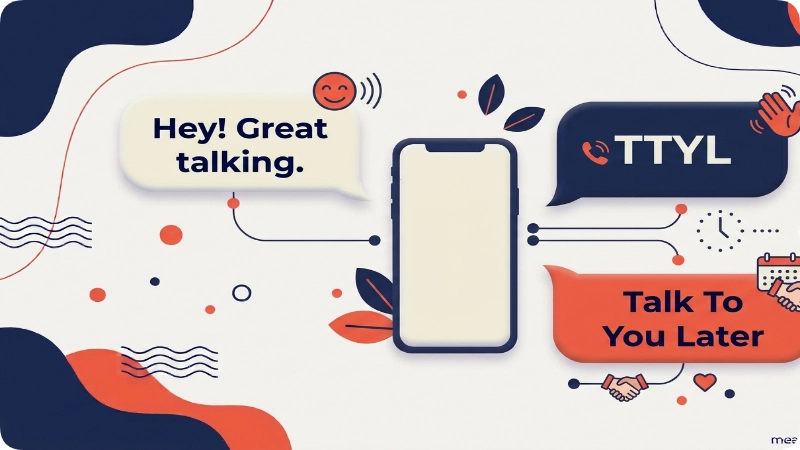
In text messages, TTYL stands for “Talk To You Later.” It’s an informal initialism used in digital conversations, including text messages, online chats, and social media messages.
The expression communicates that someone is stepping away from the current conversation but is leaving open the possibility of talking again.
For example:
“Mom’s calling me downstairs. TTYL!”
The sender is explaining that they need to stop chatting because something else requires their attention.
The expression doesn’t necessarily mean they’ll send another message immediately. “Later” is flexible and can refer to a conversation later that day, another day, or simply an unspecified future time.
What Does Each Letter in TTYL Stand For?
TTYL is an initialism in which each letter represents one word:
- T – Talk
- T – To
- Y – You
- L – Later
Unlike a shortened spelling such as “u” for “you,” TTYL uses the first letters of four words to create a shorter expression.
It’s generally pronounced by saying each letter individually: “T T Y L.”
The established expansion is “Talk To You Later,” not “Text You Later.” The distinction matters because the expression can apply to future conversations by phone, video call, or in person, not just texting.
How Does Context Change the Meaning of TTYL?
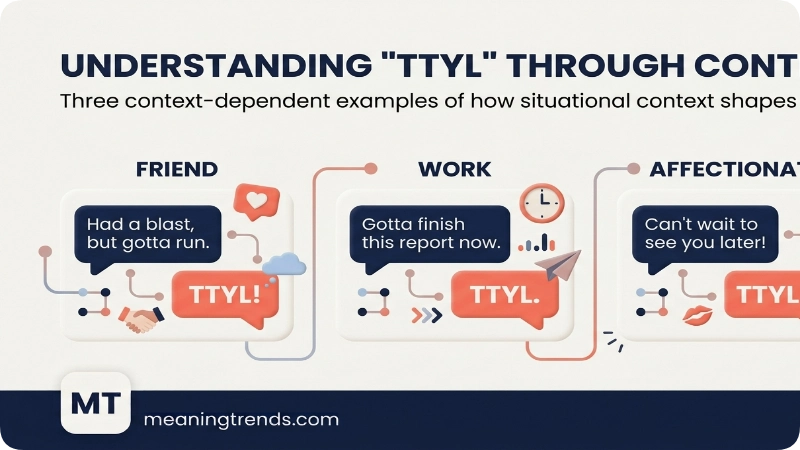
Although TTYL has a straightforward definition, its conversational tone can vary depending on the situation.
Consider these factors before interpreting someone’s message.
When a Friend Sends TTYL
When a friend uses TTYL after a casual conversation, they’re usually just saying they need to leave.
For example:
Person A: Are you coming to the game tonight?
Person B: Yeah! I need to finish my homework first. TTYL!
Here, the abbreviation functions as a friendly sign off. Nothing in the message suggests that the person is upset or avoiding the conversation.
When Someone You’re Dating Sends TTYL
If someone you’re dating sends TTYL, it generally means they’re ending the conversation for now.
For example:
Person A: I enjoyed talking with you tonight.
Person B: Me too! TTYL ❤️
The heart emoji adds warmth to the message, but TTYL itself doesn’t establish romantic interest.
Likewise, receiving TTYL without an emoji doesn’t automatically mean someone has lost interest. Look at the broader communication rather than treating one abbreviation as proof of someone’s feelings.
When a Coworker Sends TTYL
In a casual workplace conversation, a coworker might use TTYL to indicate that they need to return to their tasks.
For example:
Person A: Can we discuss the presentation tomorrow?
Person B: Sure, I have another meeting now. TTYL!
The message simply closes the current exchange.
In a more formal professional conversation, however, writing “I’ll speak with you later” may be clearer and more appropriate.
Examples of TTYL in Conversation
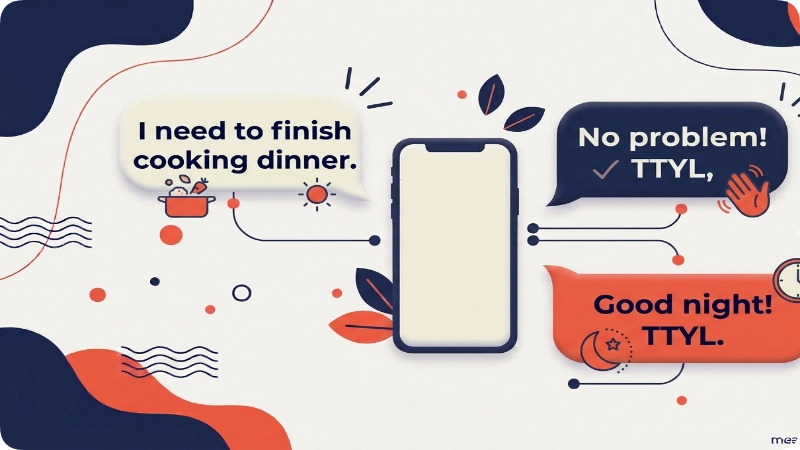
Here are some illustrative examples showing how TTYL can appear in everyday messaging.
Example 1: When someone is busy
Person A: I need to finish cooking dinner.
Person B: No problem! TTYL.
Meaning: Person B acknowledges that the conversation needs to pause.
Example 2: Ending a friendly conversation
Person A: It was great catching up with you!
Person B: Same here. TTYL!
Meaning: Both people are ending the conversation on a friendly note.
Example 3: When someone is going to sleep
Person A: It’s getting really late. I’m going to bed.
Person B: Good night! TTYL.
Meaning: Person B expects they may communicate again later.
Example 4: During a casual chat
Person A: Did you finish watching that movie?
Person B: Not yet, my brother needs the TV. TTYL.
Meaning: The sender is temporarily leaving the conversation.
Example 5: With an affectionate tone
Person A: Take care of yourself, okay?
Person B: Always! TTYL ❤️
Meaning: The sender combines a casual goodbye with an affectionate emoji.
These examples illustrate possible uses. The abbreviation doesn’t carry exactly the same emotional tone in every conversation.
Is TTYL Rude, Flirty, or Offensive?
TTYL is generally a neutral or friendly expression. It’s not inherently rude, romantic, or offensive.
Its tone depends on the surrounding conversation and the relationship between the people communicating.
- Friendly: A friend uses TTYL after an enjoyable conversation.
- Neutral: A coworker sends it before leaving an informal chat.
- Affectionate: Someone adds a heart emoji or a warm sentence.
- Potentially abrupt: Someone uses it to end a serious discussion without addressing an important question.
For example, consider these two messages:
“That was fun! TTYL 😊”
“Whatever. TTYL.”
The first sounds friendly because of its wording and emoji. The second could sound dismissive because of the preceding word and conversational context.
However, neither example proves the sender’s actual feelings.
It’s also important to remember that TTYL doesn’t guarantee someone will initiate another conversation. It expresses an intention to talk later, but it doesn’t establish a specific time or commitment.
How Do You Reply to TTYL?
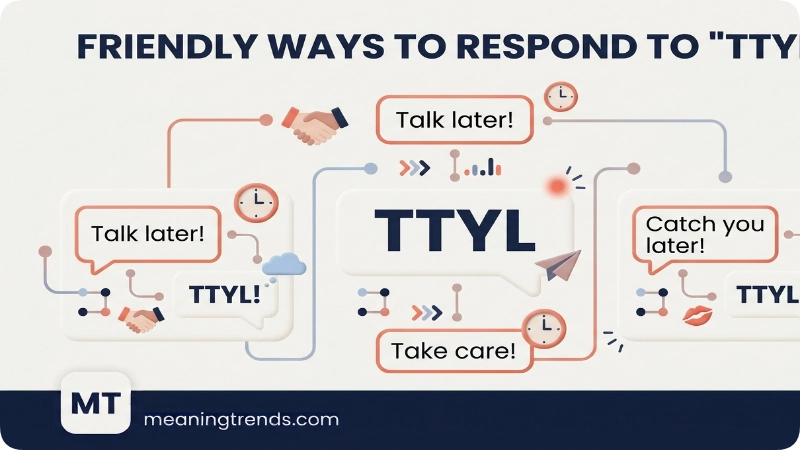
Your response can be simple. You don’t need to write a long message just because someone uses an abbreviation.
Here are some natural replies.
1. Simple reply
“Okay, talk later!”
Use this when you want to acknowledge the goodbye without adding anything else.
2. Friendly reply
“Sure! Catch you later.”
This works well when you’re chatting with a friend or someone you know casually.
3. Warm reply
“Take care! Talk soon ❤️”
Choose this when the conversation has a friendly or affectionate tone.
4. Playful reply
“Don’t disappear for too long! 😂”
This can work between people who already joke comfortably with each other.
5. Clarifying reply
“Sure! Did you mean later today or another time?”
Use this when the timing actually matters.
You can also simply reply with “TTYL!” if you want to match the other person’s conversational style.
When Should You Use or Avoid TTYL?
TTYL is best suited to informal communication.
You can comfortably use it in situations such as:
- Texting friends and family.
- Sending casual direct messages.
- Chatting with someone you know well.
- Ending an informal online conversation.
- Communicating with coworkers who regularly use casual language.
However, it may not be the best choice in formal communication.
For example, avoid using it in a formal business email, an official client message, or a professional document unless the communication style specifically allows informal abbreviations.
Instead, consider these alternatives:
- “I’ll speak with you later.”
- “Talk to you soon.”
- “I’ll be in touch.”
- “Let’s continue this conversation later.”
These expressions communicate the same general idea while sounding more complete and professional.
How Is TTYL Different From BRB and GTG?
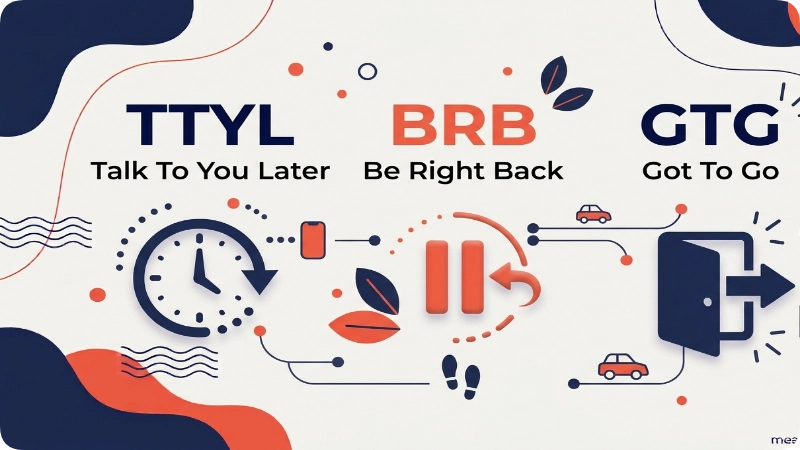
TTYL, BRB, and GTG are all informal texting abbreviations, but they communicate slightly different things.
| Expression | Meaning | Typical use | Key distinction |
| TTYL | Talk To You Later | Ending a conversation | Suggests future communication |
| BRB | Be Right Back | Temporarily stepping away | Suggests a relatively short absence |
| GTG | Got To Go | Leaving a conversation | Emphasizes the need to leave |
For example:
- TTYL: “I have to go to class. TTYL!” The sender is ending the current conversation.
- BRB: “Someone’s at the door. BRB!” The sender expects to return shortly.
- GTG: “It’s getting late. GTG!” The sender needs to leave.
The main difference is the conversational purpose. TTYL looks toward another conversation later, BRB signals a temporary interruption, and GTG communicates that someone needs to go.
Common Mistakes and Confusion About TTYL
A few details are worth remembering when interpreting this abbreviation.
1. Thinking TTYL means Text You Later
The established dictionary expansion is “Talk To You Later.” Although texting is a common setting for the expression, the word “talk” isn’t limited to written messages.
2. Assuming TTYL means goodbye forever
It doesn’t. The expression is a casual sign off that leaves future communication open.
3. Assuming someone will message you at a particular time
The word “later” doesn’t provide a specific schedule. If you need to know when someone will respond, ask directly.
4. Treating TTYL as a romantic expression
TTYL isn’t inherently flirtatious. A romantic interpretation would need additional context, such as the rest of the conversation and the relationship between the people involved.
Where Did TTYL Come From?
TTYL developed as part of the shorthand used in digital communication. It belongs to the broader family of abbreviations that make informal online conversations quicker to type.
Dictionary.com identifies its origin with digital communications, while Oxford Learner’s Dictionaries and Collins English Dictionary recognize its established meaning in informal messaging.
An exact inventor or reliably established first use date isn’t confirmed by these references, so assigning the abbreviation a specific year of creation would be misleading.
One notable cultural reference is Lauren Myracle’s young adult novel ttyl, published in 2004. The book is written in an instant message format and uses the abbreviation as its title.
The title demonstrates that the expression was recognizable in digital communication by that period, but it doesn’t establish when TTYL first appeared.
FAQs About TTYL Meaning in Text
1. What does TTYL mean from a girl?
It means “Talk To You Later.” A girl using TTYL is generally ending the conversation for now. The abbreviation alone doesn’t reveal If she’s interested, upset, or simply busy.
2. What does TTYL mean from a guy?
It has the same meaning: “Talk To You Later.” A guy may use it when leaving a conversation, getting busy, or saying goodbye casually. It doesn’t automatically indicate romantic interest or disinterest.
3. Does TTYL mean someone will text me again?
It suggests that the person is open to talking again, but it isn’t a guaranteed promise of another text. The timing and If another conversation happens depend on the individuals involved.
4. Is TTYL the same as goodbye?
Not exactly. Both can end a conversation, but TTYL specifically suggests talking again later. Goodbye doesn’t necessarily communicate that expectation.
5. Can I write TTYL in lowercase?
Yes. Both “TTYL” and “ttyl” communicate the same established meaning. Capitalization doesn’t normally change the abbreviation’s definition.
6. Is TTYL appropriate in professional messages?
It depends on the workplace relationship and communication style. It’s generally better to use complete expressions such as “I’ll speak with you later” in formal business communication.
Conclusion
TTYL is an informal abbreviation for “Talk To You Later.” People use it to close a conversation while leaving the possibility of communicating again in the future. It’s a convenient expression for everyday texting, online chats, and casual messages.
The most important thing to remember is that its definition doesn’t reveal the sender’s complete intentions. Someone might use TTYL because they’re busy, need to leave, or simply want to finish chatting for now. It doesn’t automatically mean they’re flirting, avoiding you, or promising to send another message at a particular time.
If someone sends you TTYL, a simple “Okay, talk later!” is usually a natural response. If you need a specific answer or expect to continue an important discussion, ask politely when you’ll reconnect. Understanding the expression is easy; interpreting the conversation around it requires a little more context.

Alex writes about the words and shortcuts people use in texts, group chats, and social media. Each guide explains the meaning with everyday examples and tips on when to use it